


The main types of stand-up comedy include observational comedy, storytelling, one-liners, character work, crowd work, satire, musical or physical comedy, and absurdist comedy. Most comics mix more than one style. Use this guide to compare how each one starts, where the laughs come from, and which kinds of material it suits.
What makes a stand-up style?
A style is the comedian’s usual way of finding a laugh and carrying it to the audience. The same subject can become a quick pun, a long story, an act-out, or a pointed criticism depending on who is holding the microphone. That is why labels are useful as a map, not a test. A great set often moves between styles without stopping to announce the change.
Stand-up itself has always made room for change. The National Comedy Center’s history of stand-up traces its path from vaudeville and nightclub circuits to the current era of clips, specials, and podcasts. The Library of Congress comedy collection also notes how performers such as Mort Sahl helped shape modern stand-up. The format has changed screens and rooms many times; a strong comic point of view is the part that travels.
Stand-up comedy styles at a glance
Most comedians use more than one style, but these eight labels make it easier to recognize what a set is doing:
- Observational comedy: familiar habits, rules, and frustrations seen from a sharp angle.
- Storytelling comedy: a scene that builds through details, escalation, and a clear turn.
- One-liners and wordplay: compact jokes that deliver a quick surprise.
- Character work and impressions: a performer uses voice, posture, or a persona to carry the joke.
- Crowd work: live material created from an audience interaction.
- Satire and topical comedy: humor that takes aim at current events, public figures, or bigger ideas.
- Musical, prop, and physical comedy: a song, object, sound, or movement becomes part of the laugh.
- Alternative and absurdist comedy: an unexpected premise follows its own committed logic.
There is no best style for every comedian. A performer who notices everyday contradictions may have a natural observational voice, while someone who remembers the exact details of a bad night may be better served by a story. Try the format that gives one of your ideas the clearest setup and the strongest turn, then let stage time show you what to develop next.
How to choose styles for a themed variety show
A good variety show changes the energy without making the night feel random. Start with the audience you expect and the theme that connects the performers, then look for contrast in how each act creates a laugh. A short run of one-liners can wake up the room, a storyteller can give it a longer arc, and a character or musical act can reset the pace visually.
The theme does not have to force every comic into the same lane. A show about work can include observational comedy about office rules, a personal story about a disastrous first day, and a satirical take on workplace culture. The shared subject gives the night a shape, while the different styles keep the audience curious about what comes next.
For performers, choose the style that gives your own point of view the clearest route in. A themed show is still better when the comic sounds like themselves instead of trying to imitate the act before them. The useful question is not which style is best. It is which format makes this particular idea more fun for a room to hear.
1. Observational comedy
Observational comedy starts with a detail people recognize: the small rules of airports, group chats, dating apps, customer service, family dinners, or the strange things everyone accepts without discussion. The premise says, “You have seen this too.” The payoff comes from the specific way the comedian describes it.
This style is often easy to enter because the audience already knows the setting. The best observational material does more than list annoyances. It notices the little contradiction inside a familiar moment, then finds language that makes it feel newly ridiculous. When you like a comic because they keep saying what you were thinking but could not phrase, you are probably responding to observation.
2. Storytelling comedy
Storytelling comedy builds a scene, introduces people, and lets the laughs arrive through escalation. The story might be true, exaggerated, or partly invented for the stage. What matters is that the audience can follow the turns: a normal plan becomes a bad decision, a small misunderstanding grows teeth, and the comedian keeps enough detail to make the outcome vivid.
A story set gives the performer room to create callbacks and surprises that would not fit in a one-liner. Pay attention to how the comic switches between narration and act-out. A good storyteller does not merely report that a moment was strange; they put the room back inside it. Comedy’s long history has preserved many versions of this craft, from variety-stage material to modern performance archives such as the National Comedy Center’s comedy archive.

3. One-liners and wordplay
One-liner comedy is built for speed. Each joke is compact and self-contained, with a setup that turns quickly into a punchline. Wordplay, puns, deliberate misdirection, and a dry delivery can all live here. There is little time to drift, so every word has a job.
This is not necessarily the easiest style to write. A one-liner has no long scene to hide in. It needs a clear premise and a turn that arrives fast enough to surprise the listener. Watch a few in a row and you will hear how much the rhythm matters: pause too early, explain one word too many, and the joke loses its snap.
4. Character work and impressions
Character work happens when a comedian steps into a heightened persona. That persona may be completely fictional, an exaggerated version of the comic, or a specific type of person everyone recognizes. Impressions focus on reproducing the voice, posture, habits, or logic of another person. In both cases, the laugh should be more than recognition. A convincing voice is the entry point; the joke is what the character does with it.
These styles are especially visual. A raised eyebrow, an awkward pause, or a shift in posture can carry as much information as a paragraph. On a short clip, that can make a character feel immediate. In a longer set, it gives the comedian a way to switch viewpoints without losing the room.
5. Crowd work
Crowd work is stand-up made with the room, not just delivered to it. The comic asks a question, notices something, or responds to a comment and builds the material in real time. It is not automatically better than prepared material. It is simply a different skill: listening quickly, finding a playful angle, and knowing when to move on.
Great crowd work feels spontaneous because it is. But it still depends on discipline. The performer has to protect the pace, avoid turning one audience member into the whole show, and make sure the rest of the room can follow. When it works, the audience gets the thrill of seeing a joke that could not happen anywhere else.
6. Satire and topical comedy
Satire uses humor to expose the flaws in people, institutions, or ideas. The Cambridge Dictionary definition of satire puts the point simply: it is a humorous way to criticize. Topical comedy stays close to current events, public figures, and the day’s cultural noise. The two often overlap, but they are not identical. A topical joke can be light and disposable; satire usually has a sharper target.
Because the context moves quickly, this style can age faster than a good story about a bad family vacation. That is part of its charge. A strong satirical bit gives the audience a new way to see something already in the headlines, then trusts them to keep up. The best material is clear about the target instead of settling for a vague impression of being “edgy.”
7. Musical, prop, and physical comedy
Some performers use a guitar, a song, a sound effect, an object, or physical movement as part of the joke. Musical comedy might turn a familiar genre into a ridiculous confession. Prop comedy might make an ordinary object tell a story. Physical comedy can rely on posture, facial expression, or a carefully timed act-out.
These are not shortcuts around writing. The object or song still needs a comic idea. The performance just adds another channel for the punchline. That is why a simple act-out can get a bigger laugh than a more detailed description: the room sees the joke all at once.
8. Alternative and absurdist comedy
Alternative and absurdist comedy bend the expected rules. A premise may become strangely specific, a set may reject the usual setup-punchline rhythm, or the performer may take an idea far past common sense on purpose. The laugh can come from surprise, discomfort, a committed weird choice, or the moment the audience realizes the bit is playing a different game.
This style is not code for “random.” The strongest absurdist material has its own internal logic. Once a comic establishes that logic, they can push it farther than a realistic story could go. It rewards attention, and it can be a great fit for people who want their feed to take a left turn now and then.
How to spot the style you keep coming back to
You do not need to memorize labels while you watch. Start with the feeling a comic creates. If you like a steady buildup and a satisfying finish, storytelling may be your lane. If you like quick turns and dense joke counts, try more one-liner sets. If the most memorable moments are always a live exchange with the room, look for crowd work.
- Listen for the starting point. Is the comic opening with a personal memory, a cultural observation, a character, or an audience question?
- Watch the pace. Short jokes, long stories, and act-outs each create a different rhythm.
- Notice the target. Is the joke about the performer, everyday life, another person, or a bigger system?
- See what sticks. The clips you save are better evidence of your taste than the style you think you are supposed to like.
Most comedians borrow from several of these tools. That mix is the point. One performer may be observational in the first minute, turn a family story into an act-out, then use a quick one-liner to reset the room. Labels help you notice the craft; they should not make the experience feel smaller.
How stand-up styles change in a short clip
A short clip is not simply a long set with the middle removed. It puts pressure on the opening. A storytelling comic needs a moment that makes sense before the full story has unfolded. A crowd-work clip needs enough of the audience question to let a new viewer understand the answer. A one-liner has a natural advantage because its setup and payoff already live close together.
That does not mean every clip needs to begin with the biggest laugh. Sometimes the best opening is the line that creates curiosity: why is this person so committed to this tiny problem, and where are they taking it? The next few seconds have to pay that question off. A clean edit respects the shape of the joke instead of cutting away the setup that made the laugh possible.
For viewers, clips are a fast way to test a comic’s point of view. You may not know whether someone’s full hour is for you after fifteen seconds, but you can tell whether you enjoy their delivery, their level of detail, and the kind of thing they choose to notice. That is one reason comedy has become so easy to explore across formats. The National Comedy Center frames the art form as a journey from early vaudeville through today’s trending memes; short-form comedy is one more way a distinct voice can find its audience.
For performers, the useful question is not “Which style works best online?” It is “What can a new person understand and enjoy without the rest of the set?” A sharp premise, a complete turn, and a clip that leaves the comedian’s personality intact will usually travel farther than a random loud moment. The style should still feel like the comic, not like an imitation of whatever happened to perform well last week.
Keep exploring the styles on Chuckle
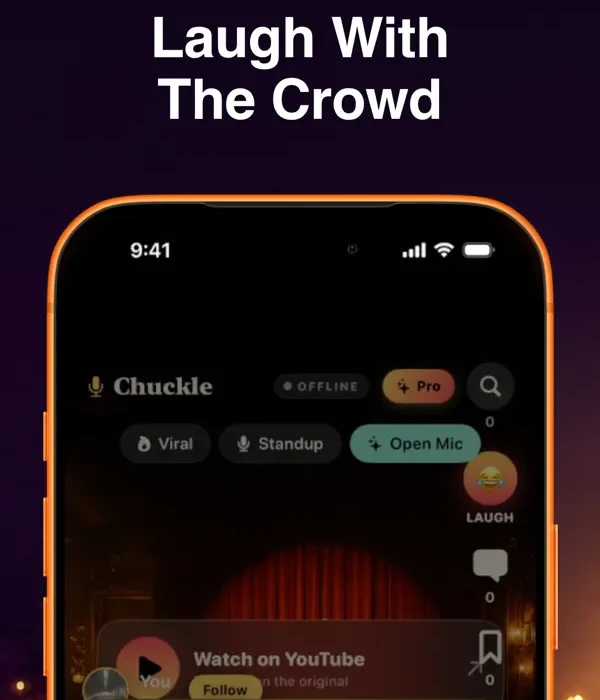
Comedy lands differently when you can follow the kind of material you actually want to watch. Chuckle’s three comedy feeds make that simple: Trending for the clips making the rounds, Standup for polished sets and punchlines, and Open Mic for comics working out fresh material. Save the performers and bits that stay with you, then come back when you want more of that particular kind of funny.
For comics, the same map can make posting clearer. A clip can lean into a polished joke, a crowd-work moment, or a new angle that needs an audience. Chuckle’s comedian page explains how to put a clip on the right stage, while Chuckle Pro covers the extra tools available in the app.
Frequently asked questions
Types of stand-up comedy FAQ
What are the main types of stand-up comedy?
Common styles include observational comedy, storytelling, one-liners, character work, crowd work, satire, musical or prop comedy, and alternative or absurdist comedy. Most performers combine several styles rather than staying in one lane.
Is crowd work a type of stand-up comedy?
Yes. Crowd work is live material built from an audience interaction. It can be part of a prepared set, but it is different because the comedian must listen, react, and keep the room with them in real time.
What is observational stand-up comedy?
Observational stand-up starts with a familiar habit, social rule, inconvenience, or small contradiction and turns it into a comic point of view. The laugh comes from recognition and a sharp angle on something the audience already knows.
Can a comedian use more than one style?
Absolutely. A comic may start with a personal story, use a few quick one-liners to keep the pace up, and finish with crowd work. Style is a set of tools, not a rulebook.