


A comedy show is easier to promote when the invitation is specific: who is it for, what will the room feel like, when is it happening, and how does someone claim a seat? You do not need a giant following to answer those questions well. You need a simple plan that helps the right local people notice, trust, and remember the night.
Start with the honest job of the show. Maybe it is your first produced showcase, a monthly room you want to make dependable, or a date where you need fans to see a stronger version of your set. That job determines the audience, the message, and what success looks like. “Please support comedy” is not enough of a reason for someone to rearrange a Thursday. Give them a clear night out instead.
1. Make the show easy to understand in ten seconds
Before you make a single post, write the one-sentence invitation. Include the city, date, venue, start time, ticket or reservation link, and the promise of the night. The promise can be modest and true: a sharp local lineup, a late show for people who like darker material, a friendly first-date night, or a monthly stage where people can see the comics they keep hearing about.
Then collect one clean source of truth. The venue or ticket page should carry the same essentials, a current lineup when it is confirmed, and the actual next step. If the location has rules about age, seating, food minimums, accessibility, or late entry, say so where someone can find it. Surprises at the door are not mysterious marketing. They are a fast way to lose a return visit.
Local comedy promoters consistently make the same practical point: start before the day of the show, and create your own useful post rather than merely resharing a generic flyer. Louisville Laughs’ advice for working comics is especially clear on both. The better version is not more noise. It is a recognizable invitation people can act on.
2. Pick one real audience before you pick a platform
A packed room rarely comes from trying to speak to everyone in the city at once. Decide who is most likely to enjoy this specific show and where they already pay attention. That might be people who have come to the venue before, fans of one comic on the bill, coworkers looking for a low-effort weekday plan, a local arts community, or friends who always ask where they can see you perform.
That choice changes the message. A comedy regular may care about the lineup and the room. A person who has never seen live stand-up may want to know whether it is relaxed, affordable, and easy to attend. A friend of yours may need a personal note that explains why this night is different from the last flyer you posted. You can keep the facts consistent while changing the entry point.
Build a short audience list in plain language: venue regulars, each comic’s existing supporters, nearby people looking for something to do, and a handful of community partners who genuinely share local events. If a group is not a fit, leave it alone. Posting everywhere is not a plan. It is how a good invitation starts to sound desperate.
3. Use a simple promotion timeline
Most independent comedy shows do not need a complicated campaign. They need enough repetition that a busy person sees the event, has time to make a plan, and gets one final nudge. Start only after the ticket or reservation path is ready.
- Two to four weeks out: announce the show with the clearest event details and a reason this lineup or room is worth a night out.
- About two weeks out: share one useful proof point, such as a great clean clip, a quick introduction to a comic, a short venue moment, or an honest story about how the lineup came together.
- One week out: ask every act to make a personal version of the invitation. Give them the link, correct details, a poster or photo, and room to use their own voice.
- Three days out: show the practical excitement: the room, the host, a rehearsal, a returning favorite, or a limited number of remaining seats if that is true.
- Show day: make one clean reminder with the start time, door information, and the simple action to take.
- Afterward: thank the room, share a short moment when performers and venue rules allow it, and give people a reason to join the next date.
A plan prevents the most common mistake: spending two weeks worrying about promotion, then making five nearly identical posts in the final twenty-four hours. People need a little time to choose a babysitter, invite a friend, or decide that leaving the couch is worth it.

4. Let a clip do the attention-getting
A poster tells people there is a show. A good clip gives them a feeling for why they might want to be there. Choose a moment that makes sense without an inside joke, opens quickly, and represents the comic people will see in the room. Keep the event details in the caption or the surrounding post so the joke can remain a joke.
Do not force every clip to sell tickets. Some clips build familiarity, some introduce a performer, and some remind a past audience that you are still making work they enjoy. The show invitation is the bridge: “If this is your kind of funny, we are doing a full night in [city] on [date].” A concise clip with a clear next step can work harder than a graphic that says everything and makes nobody curious.
Use clips with permission. Respect the venue, other performers, and the audience. A crowd-work moment may need enough context for a new viewer to understand it, while a polished bit may need the setup that gives the punchline its meaning. The open-mic preparation guide has a useful companion principle: record to learn, not just to collect content.

5. Give every comic an easy way to help
A lineup is not one audience. It is several overlapping circles, and that is an advantage if you make it easy for the people on the bill to participate. Send the details early: the show description, city, date, venue, ticket link, social handles, arrival time, and a photo or visual they can use. Avoid sending a command to “blast this everywhere.” Give them a small toolkit and a reason to make it personal.
A comic might share the bit they are excited to try, the friend they want to bring onstage, the fact that it is their first time at the venue, or simply why they like the host. Those posts sound human because they are human. You are asking people to invite their own community, not become an unpaid street team with a copy-and-paste caption.
If you are producing regularly, keep a simple shared calendar of deadlines and assets. It protects relationships. Everyone knows what is confirmed, what is still tentative, and when it is useful to speak about the show. Reliability behind the scenes makes people more likely to say yes to the next lineup.
6. Work with local partners who already reach your people
Look for partners whose audience already wants an evening out, not random accounts with a large number next to their name. The venue comes first. Then consider local newsletters, event calendars, arts groups, neighborhood accounts, bookstores, coworking spaces, restaurants, podcasts, and businesses where the show would make genuine sense.
Make the ask small and useful. Send a two-sentence description, the correct date and link, one visual, and an angle that fits their audience. A neighborhood newsletter may care about a new recurring night. A local podcast may enjoy a short guest conversation with the host. A nearby restaurant may be happy to offer a show-night special if the relationship benefits both sides. Do not promise reach you cannot deliver or ask a partner to pretend the show is a bigger event than it is.
For a producer building a recurring room, these relationships compound. One well-run night gives a venue confidence. A good venue relationship gives you a better home base. A better home base makes the next invitation easier to trust. That slow, unglamorous loop is how local audiences become regulars.
7. Make the ticket path boringly clear
When someone decides to go, the next click should take them directly to the details and tickets. Do not hide the link under a profile bio that changes every day or ask them to message you for basic information. Check it on your own phone. Does it open? Does it show the correct date? Can someone see the cost, location, and starting time without digging?
The same goes for free shows and reservations. “Free” can still be confusing if people do not know whether they should reserve a seat, arrive early, or expect a food and drink minimum. Clear details are part of hospitality. They make an interested person feel confident enough to invite someone else.
If you use a tracked link or ticket platform reporting, look for patterns rather than vanity. Which post led to actual ticket-page visits? Which partner sent people? Did a specific clip cause more questions about the show? Track the answer in a note after each date. You do not need a giant spreadsheet to remember that a personal host video outperformed a generic poster three times in a row.

8. Turn the night into the start of the next one
Promotion should not end when the lights come up. Thank the venue, performers, and audience in a way that feels proportional to the show. Save the useful pieces: a photo of the room, a clip that represents the night, a few kind audience comments, and the notes about what actually brought people in. Ask the venue what they noticed too.
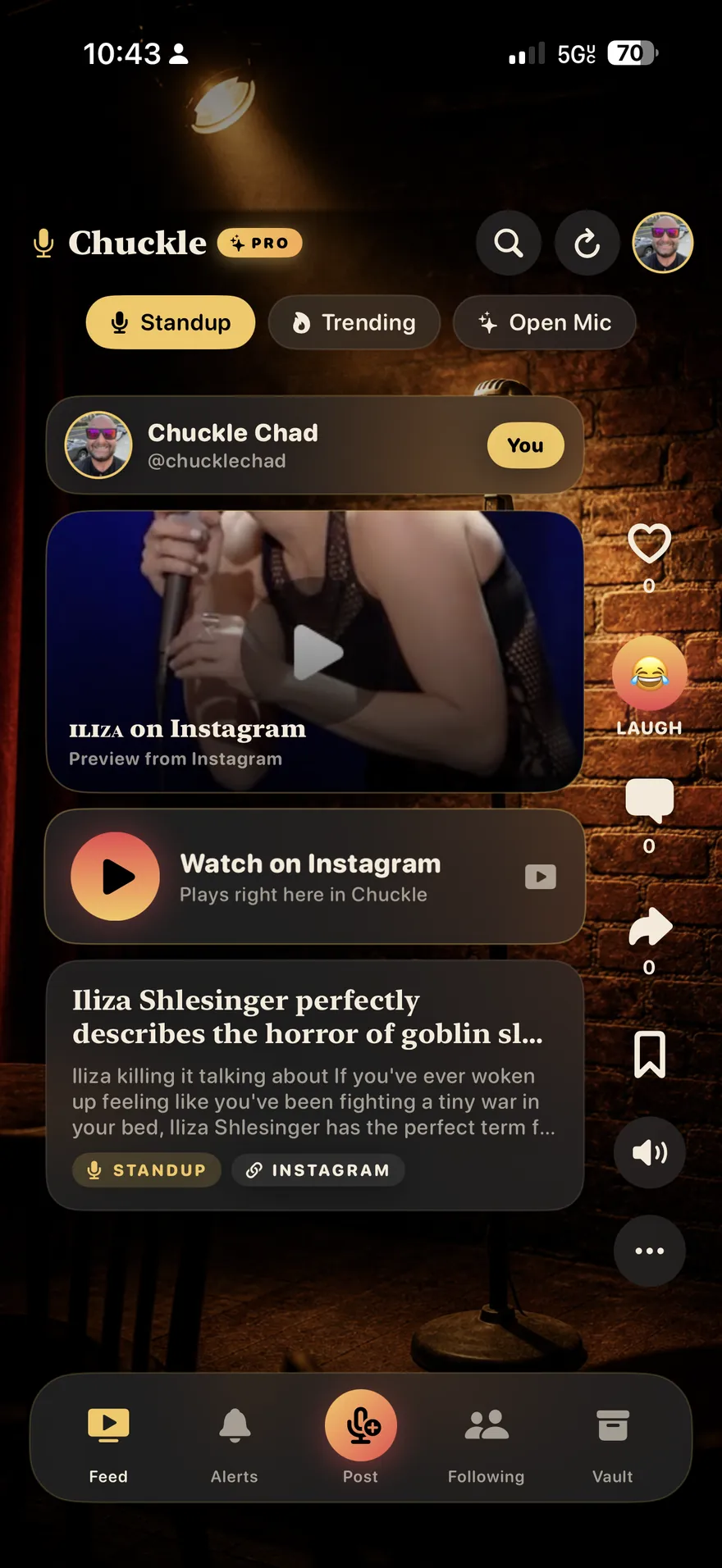
Then give the people who enjoyed the show a way to stay connected. That can be an email list, a follow on the comedian’s preferred channels, or a profile that helps a new fan find more work. Chuckle gives comedians a comedy-first profile for their clips, dates, and links, so a person who laughs at one moment has a simple path to the next one.
The real asset is not one sold-out screenshot. It is a growing group of people who trust that when you recommend a comedy night, it will be worth their time. Protect that trust with clear information, a thoughtful lineup, and an invitation that sounds like you.
A short checklist for your next show
- Confirm the date, venue, lineup, doors, start time, ticket or reservation link, and access details.
- Write one sentence that explains who the night is for and why it will be fun.
- Choose one representative clip and one clean event visual.
- Make a two-to-four-week timeline with only the moments that matter.
- Give every act a small, accurate promotion kit they can personalize.
- Contact a few relevant local partners with a clear, easy ask.
- Check the ticket path on a phone before you send anyone to it.
- After the show, save what worked and invite the room back for the next one.
Promotion gets easier when it becomes a creative habit rather than a last-minute apology. Build a room people can understand, make the invitation honest, and give your best clip a place to lead. Then keep making the next show easier to choose.
Frequently asked questions
Comedy show promotion FAQ
How early should I promote a comedy show?
Start when tickets or reservations are actually available. For a small local show, two to four weeks gives people time to make plans without letting the event disappear from their memory. Use that time to move from a clear announcement to specific reasons to attend, then a simple final reminder.
What should a comedian post to promote a show?
Use a strong clip that shows your point of view, a clear show graphic or photo, the city and date, where to get tickets, and an occasional personal reason the night matters. The clip earns attention; the event details give that attention somewhere useful to go.
Should every comedian on the lineup promote the show?
Yes, when they have the event details and a simple package they can make their own. Each comic reaches a different circle of people. A shared plan works best when everyone knows the audience, ticket link, deadline, and a few suggested angles without being asked to copy the same post word for word.
How do I know whether comedy-show promotion worked?
Track the signals that lead toward a real room: ticket-link visits, reservations, replies from local partners, email signups, and which clips or posts brought questions about the show. A high view count can be nice, but a repeatable way to move an interested local person toward a seat is more useful.