


A useful open mic set is not the one that proves you are fearless. It is the one that gives you a clear, manageable experiment: a few minutes of material you can say out loud, a room you can respect, and enough attention afterward to learn what changed when the jokes met real people. The goal is not a perfect debut. It is a first set that teaches you what to do next.
1. Confirm how the room actually works
Open mics do not all run the same way. Some take names online, some use a sign-up sheet at the venue, and some draw the order after a deadline. Before you spend the day rehearsing, check the organizer's current instructions. Knowing where to be, when to arrive, how long your slot is, and whether there is a cover or minimum prevents the least funny possible reason to miss a set: being on time for the wrong time.
The MasterClass overview of open mic sign-up makes the simple point that both advance and in-person lists are common. Treat the room's own instructions as the rule. Arrive with enough margin to sign up, introduce yourself if appropriate, and take in the space without turning the host into your personal concierge.
2. Prepare for the slot, not your dream special
A short slot asks for a short job. If the room gives you three minutes, do not bring fifteen minutes and hope adrenaline edits it. Choose a compact opening, two or three bits that belong together, and a clean final line. Time the set aloud, standing up, at the pace you would use with people listening. Reading in your head gives your jokes superhero speed. A room does not.
Leave some material in reserve, but do not pack every spare line into the slot. Open Comedy's beginner guide recommends timing material out loud and allowing room to cut. That is smart preparation because laughter, pauses, and a quick recovery all take time. A set that ends one clean beat early looks more composed than one that is still explaining itself while the light is on.
Use the comedy-set guide when you need help choosing an order. Start with the clearest thing you have, put related material together, and keep the ending obvious enough that you can find it even if nerves make the middle fuzzy.
3. Rehearse the movement as well as the words
Run the set out loud at least a few times. Practice walking to an imaginary mic, taking a breath, saying the first line, and leaving after the last. This is not theatre-school homework. It removes small decisions from a moment when your brain is busy noticing a room full of strangers.
Speak at a normal pace. Mark any word you habitually swallow, any setup that needs more context, and any sentence that feels good on paper but awkward in your mouth. Your best revision may be a cut rather than a new punchline. The first goal is for the audience to understand the picture before you ask them to enjoy the turn.
A note card is fine if it lets you stay present. Use big, sparse reminders: the first word of each bit, the final line, and an exit. Do not write a tiny paragraph and then punish yourself for looking down. The card is a handrail, not a teleprompter.

4. Get there early enough to watch the room
Watching the earlier acts gives you information that no generic advice can. Is the stage close to the crowd? Does the host use a light? Is the audience mostly performers waiting for their turn, or a mix of regulars and friends? What happens when someone goes long? You are not trying to reverse-engineer every laugh. You are learning the room's pace and its basic etiquette.
Open Comedy's first-open-mic checklist advises performers to sign up as soon as they arrive, watch earlier acts, and stick to the time. Those habits do more than make you look prepared. They make it easier to focus on your own set because the room stops being an unknown object in your head.
Be part of the audience when someone else is on. Put the phone away, do not talk over the set, and resist the urge to rehearse at full volume in the corner. Comedy rooms remember people who make the night harder. They also remember people who are easy to work with.
5. Make the opening easy to hear
The first line does not have to be your funniest line, but it should make the room understand where it is going. A direct observation, a clear personal fact, or a short premise usually works better than a long apology or a vague announcement that you are new. Give the audience a simple doorway into your point of view before the material asks them to follow a stranger somewhere more specific.
Then allow a little space after a laugh. New comics often hear a reaction and start the next sentence before the room can finish it. You do not need to freeze in place, but a short beat lets the laugh land and helps you hear whether it was for the word you expected. That is the feedback you came to collect.
If you lose your place, use the next recognizable beat instead of trying to reconstruct every word. The audience does not have your written version in front of them. They only know what you say next. A calm jump forward is nearly always cleaner than announcing that you forgot something.
6. Keep the mic and the clock simple
When your name is called, walk up, adjust the mic once, and begin. If you use the stand, move it deliberately. If you take the mic out, put it back when you leave. No one needs a dramatic speech about how nervous you are. A quick hello or your first joke is enough.
Respect the light. It is a signal, not a review of whether the set is good. Find the ending you planned, say it, thank the host, and walk off. The advice in MasterClass's open-mic guide is right on this point: every performer shares the schedule, so overrunning does not only affect you. Keeping time earns trust and makes it easier to return.
If a joke is quiet, do not narrate the silence. Finish the line, let a breath pass, and move on. Trying to force a reaction usually adds panic to material that simply needs a later rewrite. Your calm exit from a missed laugh is part of the craft too.
7. Give yourself a useful first-night goal
“Crush it” is not a workable assignment. It gives you no way to tell whether the night taught you anything. Choose a smaller target before you go: remember the opening without looking down, let the first laugh breathe, keep the set within the light, or try a new closing line. A clear goal steadies your attention when the room feels louder than expected.
Make the goal about an action you control, not a reaction you cannot. You cannot make a particular crowd laugh at a particular volume. You can give them a clean setup, speak clearly, and stay present long enough to hear what happened. That distinction is useful because it turns nerves into a short list of things to do.
Keep a small record from each room. Write the venue, the slot length, the order you used, and one sentence about the response. After a few mics, patterns begin to appear. Maybe a bit only works after a quicker opener. Maybe you rush when the first line gets a laugh. Maybe a joke that felt dead was simply placed after a stronger one. Those patterns are more valuable than a vague memory that the night felt good or bad.
Keep the record kind as well as specific. You are building a practice, not collecting reasons to quit. A first set can be both rough and worthwhile. The better question is always what you can carry into the next room.
8. Record the lesson, not just the applause
If the room allows it, record audio from a discreet phone spot. Ask the host first and respect a no. You do not need a cinematic video of a first set. You need an honest record of timing, wording, and the moments where the room changed.
When you step offstage, write a few notes before the adrenaline turns the night into a blur: what got a reaction, where you rushed, what you forgot, and what you improvised. The Toastmasters guide to comedic confidence similarly recommends recording sets and noting where laughs happen. Treat each performance as evidence. A laugh is useful, but so is finding out that a setup needs one clearer detail.
Do not rewrite the whole set in the taxi home. Pick one question. Was the first line understandable? Did the second bit take too long to begin? Was the final joke in the wrong place? Change one thing before the next performance, then you will know what caused the difference.
Use Chuckle to keep a promising clip in context
An open mic can produce a clip worth sharing, especially when a short bit has a clear setup and payoff. Keep enough of the beginning that a new viewer understands why the room reacts. A laugh alone is not the whole story.
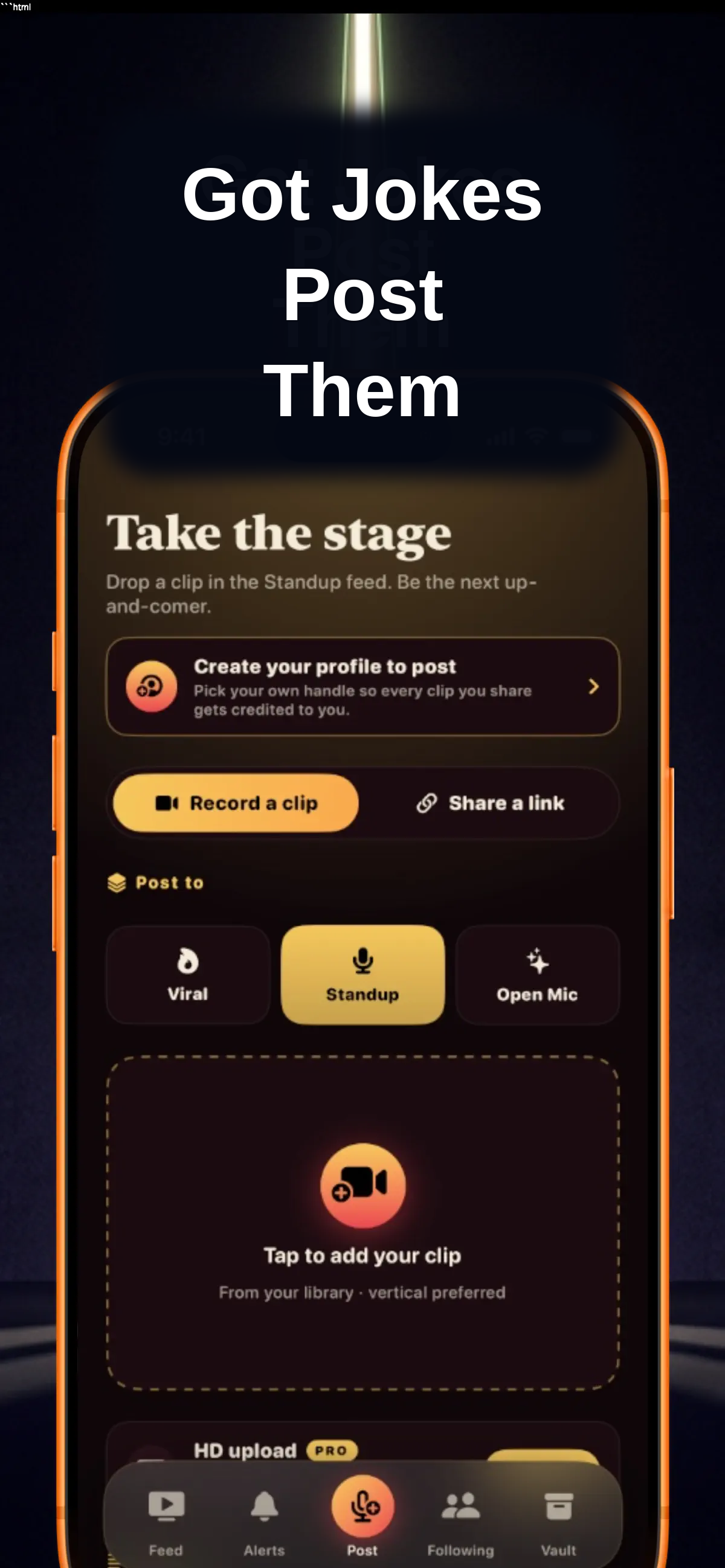
Chuckle gives comedians a place to post a clip with a title, caption, and the right feed, so people who find one moment can understand your point of view and find more of your work. The apps-for-comedians guide explains how profiles and feeds help a finished clip travel. Save the recordings that teach you something first. Share the ones that make sense on their own.
A simple open mic checklist
- Confirm the room, sign-up method, slot length, and arrival time.
- Time a short set out loud and choose a clear ending.
- Bring a simple note card if it helps you stay on track.
- Arrive early, sign up, and watch the room.
- Listen when other performers are on.
- Start cleanly, respect the light, and thank the host.
- Record only when the room allows it.
- Write a few notes, then test one focused revision next time.
Open mics reward repetition, not a single heroic night. The useful standard is simple: leave with one piece of evidence about your writing, timing, or stage presence. Do that often enough and the room becomes less mysterious, your material becomes more precise, and the version of you holding the microphone starts to feel familiar.
Frequently asked questions
Open mic comedy FAQ
How long should my first open mic set be?
Follow the time the host gives you. Many comedy open mics offer about three to five minutes. Prepare a little more material than the slot, but choose a clear point where you can finish early if the light comes on.
Should I bring notes on stage?
A small card with a few beats is fine for a first set. It should help you find your place, not become a script you read to the room. Keep the words large and use it only when you need it.
What should I do if my jokes do not get laughs?
Keep your pace, finish the thought, and move to the next beat. Afterward, write down what happened while it is fresh. One quiet set is information about that version of the material, not a verdict on you.
How early should I arrive at an open mic?
Check each room's instructions and arrive before its sign-up deadline. Many rooms use a list or draw, so being early gives you time to sign up, settle in, and see how the room works.