

A comedian website has one job: make it easy for the right person to understand your act and take the next useful step. A booker should be able to find a strong clip, check whether you fit the room, and contact you. A new fan should be able to find more than the one video that got their attention. That does not require a giant site. It requires a clear, current home for the work.
Think of the page as your reliable handoff. Social posts are excellent for being discovered, but they move quickly and serve several audiences at once. Your website or public profile is where you decide what someone sees after they search your name, receive a recommendation, or want to check whether you are right for a lineup. If it takes six tabs and a scavenger hunt, you are making a busy person work too hard.
Start with the answer to “Who is this comedian?”
The first screen should give a visitor enough context to keep going. Use the name you perform under, the city or region that matters for booking, and a plain sentence about the kind of comedy you do. That sentence does not need to be a slogan. It can name a point of view, a recurring subject, or the kind of room you are ready to work.
For example: “Chicago-based stand-up comedian with sharp stories about family, bad jobs, and becoming an adult later than planned.” It is specific enough to picture, but it does not pretend you are the only person who has ever had a difficult family. Add a clean photo if you have one. The aim is recognition: someone who has just seen a clip should know immediately that they landed in the right place.
Avoid opening with every credit, every old flyer, or a paragraph that starts before you began doing comedy. A website is not a memoir. It is a practical introduction. Your comedy bio can carry the fuller story, but the first screen should make the important facts easy to scan.
Put one representative clip where it cannot be missed
For most bookers, a clip answers the real question faster than any written description: what happens when this person has a microphone? Choose something that represents the show you can actually deliver now. A club clip can be perfect for club bookings. A clean clip matters if you are pitching a clean room. A crowd-work moment can show quick listening, but label it honestly so nobody mistakes it for a prepared bit.
Do not lead with the clip that has the biggest view count if it is a strange exception, depends on a long setup, or no longer sounds like you. Lead with a moment that works without an inside joke and gives a first-time viewer enough context. One good clip at the top is stronger than eight thumbnails that ask a booker to guess where to begin.
The comedy EPK checklist from LiveEPK is a useful outside reference because it puts a playable representative clip, a short bio, credits, set lengths, photos, availability, and a booking contact in one place. You do not need to copy anyone’s exact layout. You do need to answer those practical questions truthfully.

Make the booking details boringly easy to find
Clarity is part of being easy to book. Add the information you can stand behind: where you are based, whether you travel, the set lengths you are ready to perform, and whether you have clean material if that is genuinely true. If you host, feature, produce, write, improvise, or work a specific kind of room, say so only when it helps a reader decide.
Be precise about credits. “Featured at” and “performed at” mean different things. A festival selection, a contest placement, a support slot, and a podcast appearance are different kinds of proof. Name the credit, use the accurate role, and leave out anything a booker would have to decode. A short list of real proof is more useful than a long cloud of logos and adjectives.
Keep an availability note simple. You do not need to publish your entire calendar if that does not suit your work. “Available for Midwest club dates and private events” is useful when it is true. If you have a public dates page, make sure old shows disappear promptly. A site that announces a show from eight months ago creates doubt where there did not need to be any.
Give people materials they can actually use
When a venue says yes, it may need a short bio, a headshot, a clip, or a link for a listing. Save everyone time by keeping those materials easy to find. That does not mean you need a glossy press campaign before you can work. It means your best current headshot is downloadable or shareable, your short bio is current, and the person booking you knows which link to use.
Keep one short bio and one longer version. The short version helps a host or venue make a listing without rewriting your life story. The longer version can include a little more context for a press page, a festival submission, or a show announcement. The guide to writing a comedy bio explains how to keep both versions honest, readable, and connected to the clips people will see.
If you use a one-sheet or press kit PDF, treat it as a companion, not the only destination. A current web page is easier to update and easier to open on a phone. The downloadable version is still handy for a venue that needs a file, but the link should be the place you keep current.

Separate the fan path from the booking path
Fans and bookers can both enjoy your work, but they do not arrive with the same question. A fan may want another clip, upcoming dates, or a follow link. A booker may want a concise description, clean-material information, set length, a clip, and one email address. Your site can serve both without turning into a maze.
Give each person a clear next step. A fan-facing link can point to more clips or your public dates. A booking link can open a short email, a booking form, or the contact details you actually monitor. Do not make someone send a direct message just to ask whether you are available, and do not hide the booking email inside a paragraph at the bottom of an old blog post.
One contact route is usually enough. Multiple emails, manager names, old agents, and half-working forms can create the opposite of professionalism. Choose the route you check, name what it is for, and keep it current. If you have representation, make that relationship clear rather than forcing the reader to guess whether they should contact you or someone else.
Make every page work on a phone
A booker may open your link between meetings. A fan may arrive from a social post. Both are likely to be on a phone. Open your own page regularly on a small screen and ask a ruthless question: can someone find the clip, basic facts, dates, and contact path without pinching, hunting, or waiting through a wall of images?
Keep the page light enough to load comfortably. One strong photo and one lead clip are more valuable than a gallery of files that makes the useful part slow to reach. Label links so people know where they go. “Watch my 2026 club set” is clearer than “video.” “Book Taylor for your show” is clearer than “contact.” The small choices make the page feel cared for.
Before sharing a new link, test it as a stranger. Open it in a private browser window, tap the clip, tap the booking route, and check that any dates and social links still go somewhere real. This is a five-minute habit that prevents the kind of awkwardness a comedian should save for the stage.
Keep the site current without making it your full-time job
Create a small update ritual after a good set, a new credit, a changed contact detail, or an announced date. Replace the lead clip only when you have a better representation of the act. Update the bio when your work has actually changed. Remove expired dates. That is enough for most working comics.
Do not wait for a perfect career milestone to put up a page. A newer comedian can be clear about where they are, share one honest clip, and make it easy to stay in touch. A more experienced comedian can use the same structure with deeper credits and more dates. The work on the page should match the work you can do in the room.
Skip the five mistakes that make a good act look harder to book
First, do not let the best clip hide behind a dozen menu items. Put it where a visitor can make a quick decision. Second, do not leave a dead social link or a date from last season on the page. Stale details suggest that the page is not being watched, even when your work is strong.
Third, do not describe yourself only with broad words such as “hilarious,” “relatable,” or “high energy.” Give a reader a little evidence of your point of view instead. Fourth, do not make every visitor choose between several vague contact links. One direct booking path makes the next step obvious. Finally, do not build the page around what you hope to be doing in two years. Bookers are deciding what you can do for this room, this audience, and this date.
The remedy is pleasantly unglamorous: choose the current proof, state the useful facts, check the page on a phone, and update it after meaningful changes. A simple page that does those things will usually work harder than a flashy one that leaves a visitor wondering where to look.
Use Chuckle to keep the proof close to the work
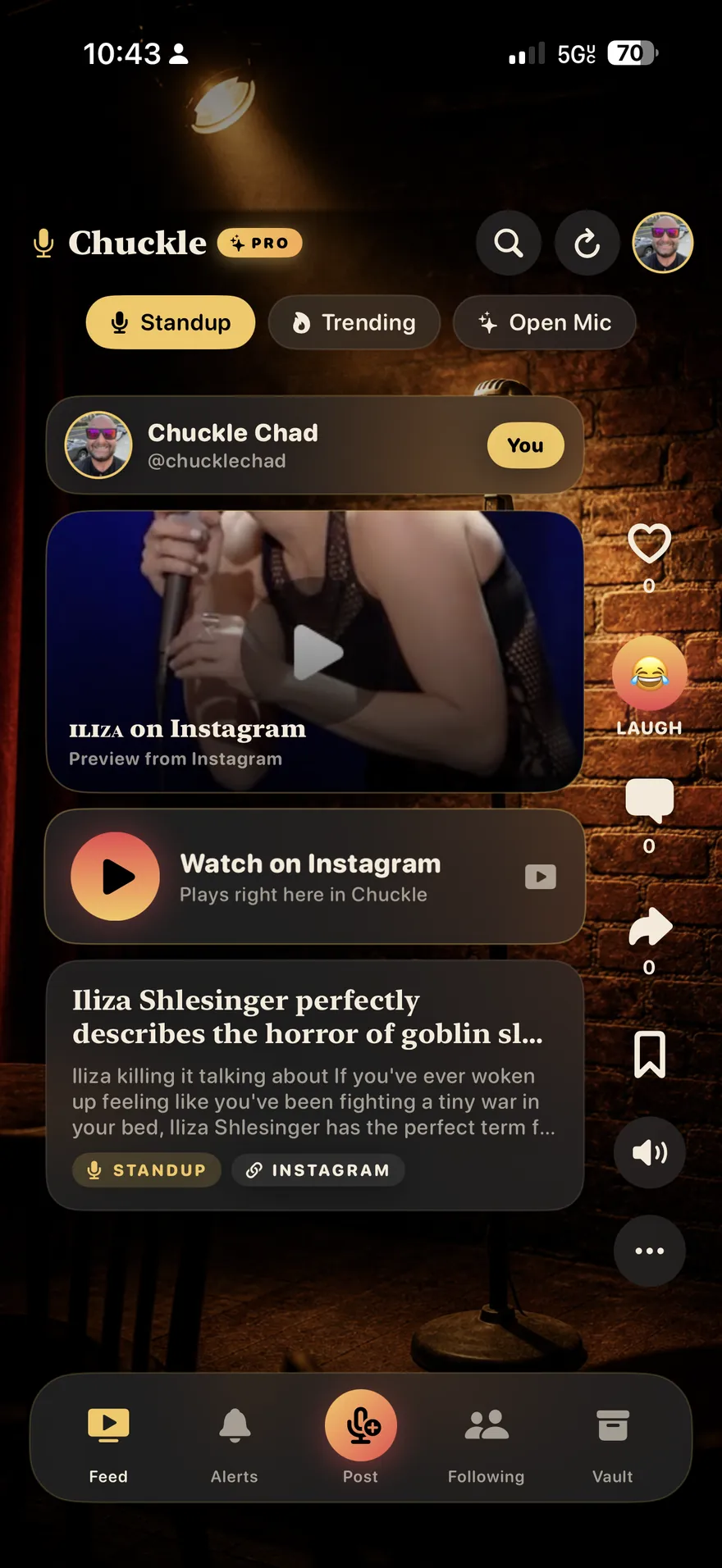
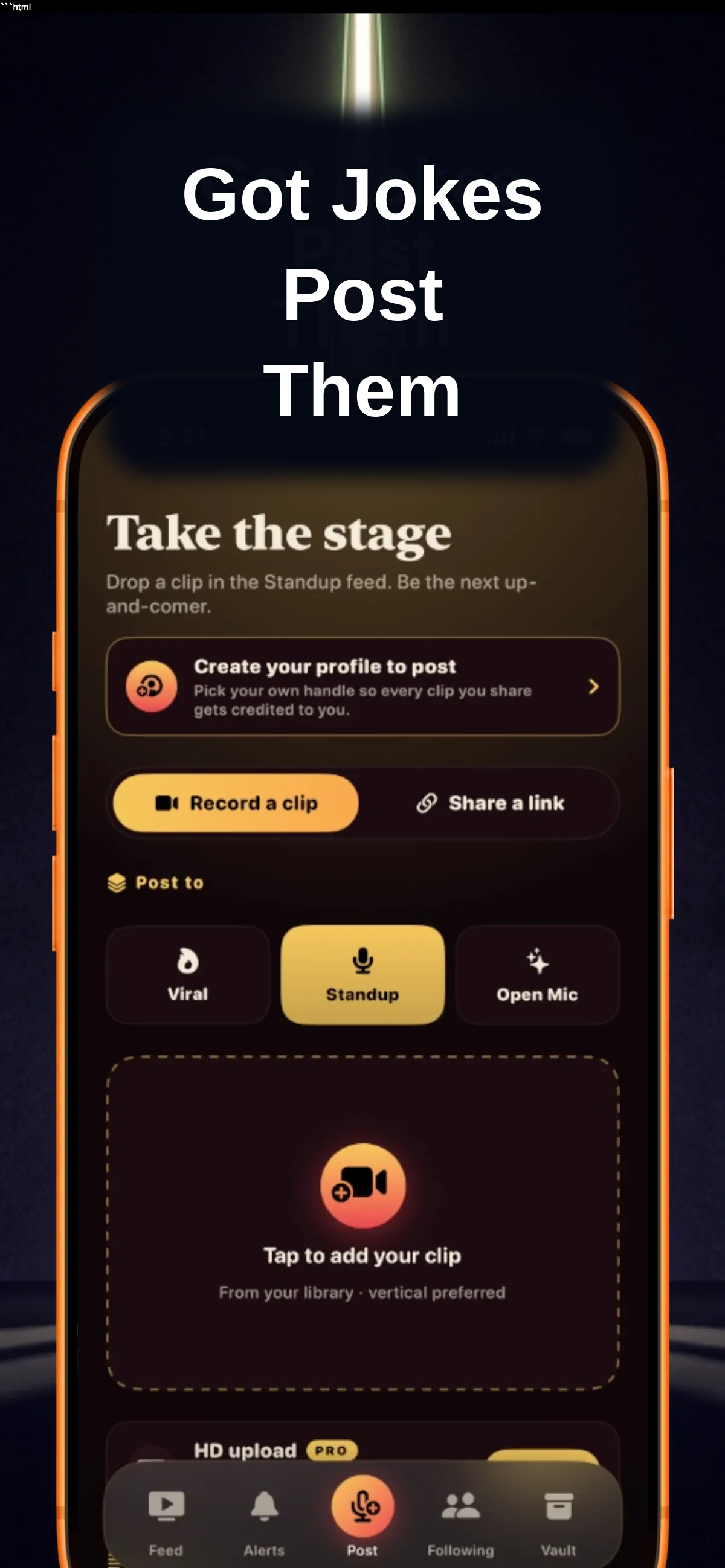
A personal website gives people a dependable front door. Chuckle can give a comedian a comedy-first place to keep sharing the work behind that door. Comedians can submit clips, build a profile, add dates and links, and choose the right feed for the material. That makes it easier for an interested viewer to move from one strong clip to more of your work, instead of losing you in a mixed feed.
Use the two together. Put your most useful public information where a booker can find it. Use clips to show what the words mean. Then keep making and sharing the work that gives a new fan a reason to come back. Your page does not have to convince everyone. It has to make the next right yes easy.
A comedian website checklist
- Your performing name, location or travel range, and a plain description of your act.
- One representative clip near the top of the page.
- A current short bio that venues can use without rewriting it.
- Truthful credits, set lengths, and clean-material information when relevant.
- A current photo and an easy-to-share press image if you have one.
- Upcoming dates or a simple availability note, kept current.
- One clear booking contact route that you actually check.
- Links to more clips, social profiles, or a comedy-first profile that help the right visitor continue.
- A quick phone check before you send anyone the link.
Frequently asked questions
Comedian website FAQ
Do comedians need a website?
A comedian does not need a large, complicated website to work. A simple, current page is useful when a booker, venue, journalist, or new fan needs to find clips, a bio, dates, and one booking contact without searching through several social profiles.
What should a comedian put on a website?
Start with your performing name, location or travel range, one strong clip, a short bio, clear set information that you can honestly offer, current show details when available, a useful photo, and one way to get in touch about bookings.
Should a comedian use a website or social media?
Use both for different jobs. Social platforms help a comedian meet new people, while a simple website or profile gives an interested booker or fan one dependable place to watch, understand, and contact you. Keep the facts consistent between them.
How often should a comedian update a website?
Update it whenever a booking detail, best clip, credit, contact, or upcoming date changes. A quick monthly review is usually enough to catch stale links and old show information before someone else finds it first.