


Writing stand-up comedy is not waiting for a perfect joke to appear. It is a repeatable process: notice something specific, stay with it long enough to find the tension, write more than one possible turn, and say it out loud until it sounds like a person instead of a document. The best starting point is usually not a clever premise. It is a real one.
How to write stand-up comedy, in short
Start with one specific observation you can explain clearly. Write several ways to turn it, then arrange the strongest ideas into a short bit with a setup, a surprise, and room for another laugh. Say it out loud, cut what the audience does not need, and make one purposeful change after each attempt.
- Find the real detail. A narrow premise gives the audience a picture to follow.
- Give yourself options. Several possible punchlines reveal the best direction.
- Test it on its feet. A rehearsal or open mic tells you what the page cannot.
1. Start with a premise you can actually talk about
A premise is the small problem, contradiction, or observation that gives a bit somewhere to go. It is not the punchline. It is the thing that makes you think, "Why is this like that?" or "Why am I the only one who notices this?" A bad commute, a family group chat, a weird gym rule, a job interview, or the way people behave at self-checkout can all be premises. The important part is that you have a point of view on it.
Make the premise narrower before you try to make it funny. "Dating apps are weird" is too wide to hold onto. "My dating profile makes me sound like I am applying to be a golden retriever" gives you an image, a voice, and a direction. Specificity gives the audience something they can see. It also keeps you from borrowing the most obvious version of a joke everyone has already heard.
Keep a running list in the place you already use: notes app, notebook, voice memo, whatever you will open when a thought shows up. The first guide in this category, How to Start Stand-Up Comedy, uses the same habit for a reason. You cannot shape material you never saved.
2. Find the pressure inside the idea
Once you have a premise, ask what makes it uncomfortable, unfair, overcomplicated, or strangely true. That pressure is often the source of the joke. Someone who says they "love to travel" may actually love sitting in a new coffee shop with the same laptop. A restaurant may call itself "casual" while making you solve a puzzle just to read the menu. The comic work starts when you name the gap between what something promises and what it delivers.
Write the plain version first. Then write what you wish you could say about it, the worst possible version of it, the childlike interpretation, and the overly serious interpretation. You are not trying to prove any one line is brilliant. You are building options. A premise that supports five possible turns is more useful than a clever sentence with nowhere else to go.
A practical writing exercise is to make two columns: what the audience expects and what you think is actually happening. The distance between those columns is where exaggeration, comparison, and misdirection begin. That does not make the joke mechanical. It gives your imagination something to push against.
3. Write several turns, not one precious punchline
New comics often stop as soon as they find one line that feels funny in private. Keep going. The first idea may be the setup for the better one, or it may reveal the language you need for a stronger tag later. Give yourself a small target: write ten possible endings, comparisons, or images for the same premise. Most of them can be bad. Their job is to make the useful choices visible.
Three reliable directions can help when the page goes quiet:
- Exaggerate the consequence. Ask what happens if the annoying rule is taken completely seriously.
- Change the comparison. Describe the situation as if it belongs in a different world: a court case, a hostage negotiation, a museum exhibit, a disaster movie.
- Reverse the assumption. Let the audience expect one meaning, then reveal the more honest or ridiculous one.
These are prompts, not replacements for a point of view. The line should still sound like something you would say. If you are naturally dry, do not force a big theatrical act-out because a book said it works. If you tell stories, make room for the detail that lets the audience picture the moment. The different stand-up styles are useful here because they show how the same subject can become a one-liner, story, observation, or character moment.
4. Build the bit in beats, not paragraphs
Stand-up is spoken. A block of writing that looks elegant on a page can take too long to understand in a room. Break the material into beats: the setup that gives the audience the situation, the turn that changes how they see it, and the extra tags that keep the laugh moving. Each beat should earn the next one.
Try this simple shape: state the normal expectation, introduce the odd detail, then make the audience revise what they thought the bit was about. For example, an observation about a neighbor can begin as a small complaint, become a strange comparison, then land on the detail that makes the whole thing feel personal. The audience does not need to know your outline. They only need enough information to follow the road you built.
Transitions matter too. If a line only repeats what the previous line already told the room, cut it. If the next idea needs a new fact before it can work, give that fact early and plainly. GOLD Comedy's guide to building a five-minute set makes a useful structural point: connected jokes create a set with a beginning, middle, and end instead of a pile of unrelated thoughts.
5. Write an opening that gets to the point
Your opening does not have to be your biggest laugh, but it should make the audience want to follow you. Start close to the premise. A long apology, biography, or explanation delays the part they came to hear. Give the room a clear situation and let the first unusual detail arrive early.
That is especially important when you later turn a live moment into a clip. A new viewer does not know the conversation that happened before the video started. The opening needs to contain enough context for the turn to make sense without removing the surprise. The Stand-Up Comedy Clips page is a good reminder of the standard: a short moment can be enough when the setup, point of view, and payoff all arrive together.
Write your closer separately. The final line should feel like a landing, not an accidental place where you stopped talking. It can be the strongest version of the main joke, a reversal that reuses the opening image, or a tag that makes the audience see the premise one last time. You can discover the closer late in the process, but knowing that the bit needs one will keep the middle from wandering.
6. Say it out loud, then edit for the ear
The page is only the first draft. Stand up and say the whole bit at conversational speed. You will hear where a sentence has too many turns, where you have hidden the important word at the end of a long explanation, and where a pause belongs. Record one rehearsal if you can. Listening back is less romantic than trusting your memory, but it is much more useful.
Cut explanations before you cut personality. If a detail does not change the image, raise the stakes, or make the next line clearer, it may not need to be there. Move strong nouns and verbs closer to the end of the sentence so they have room to land. Replace vague language with the odd, specific detail you actually noticed. This is how a premise becomes yours instead of a generic topic.
Do not memorize punctuation. Memorize the route through the bit: what the audience needs to know, what they should expect, and what you want to reveal next. That gives you room to sound alive rather than like you are reading a speech from inside your head.
7. Test one change at a time
A laugh is feedback, but it is not a complete diagnosis. If a line misses, ask whether the room understood the premise, whether the turn arrived too quickly, whether you rushed through the pause, or whether the idea needs a different angle. Make one purposeful change before the next attempt. When you rewrite the whole bit at once, you cannot tell what improved it.
Keep a brief record after you perform: which version you used, what got a response, what felt unclear, and what you want to test next. This does not need to become a complicated system. It is just a way to replace "that set felt bad" with a useful note such as "the audience needed the detail about the restaurant before the comparison." The first time you try a bit is not the verdict. It is the first useful version of the experiment.
For a fuller first-performance plan, return to the 30-day stand-up guide. It covers finding an open mic, using the room as information, and returning with one revision instead of chasing a flawless first set.

Use Chuckle to keep the work moving
When a bit has a clean setup and a complete turn, save a clip that represents it honestly. A clip does not need to be a perfect final version to be worth sharing. It needs enough context for a new viewer to understand the joke and enough of your delivery for them to recognize the comic behind it.
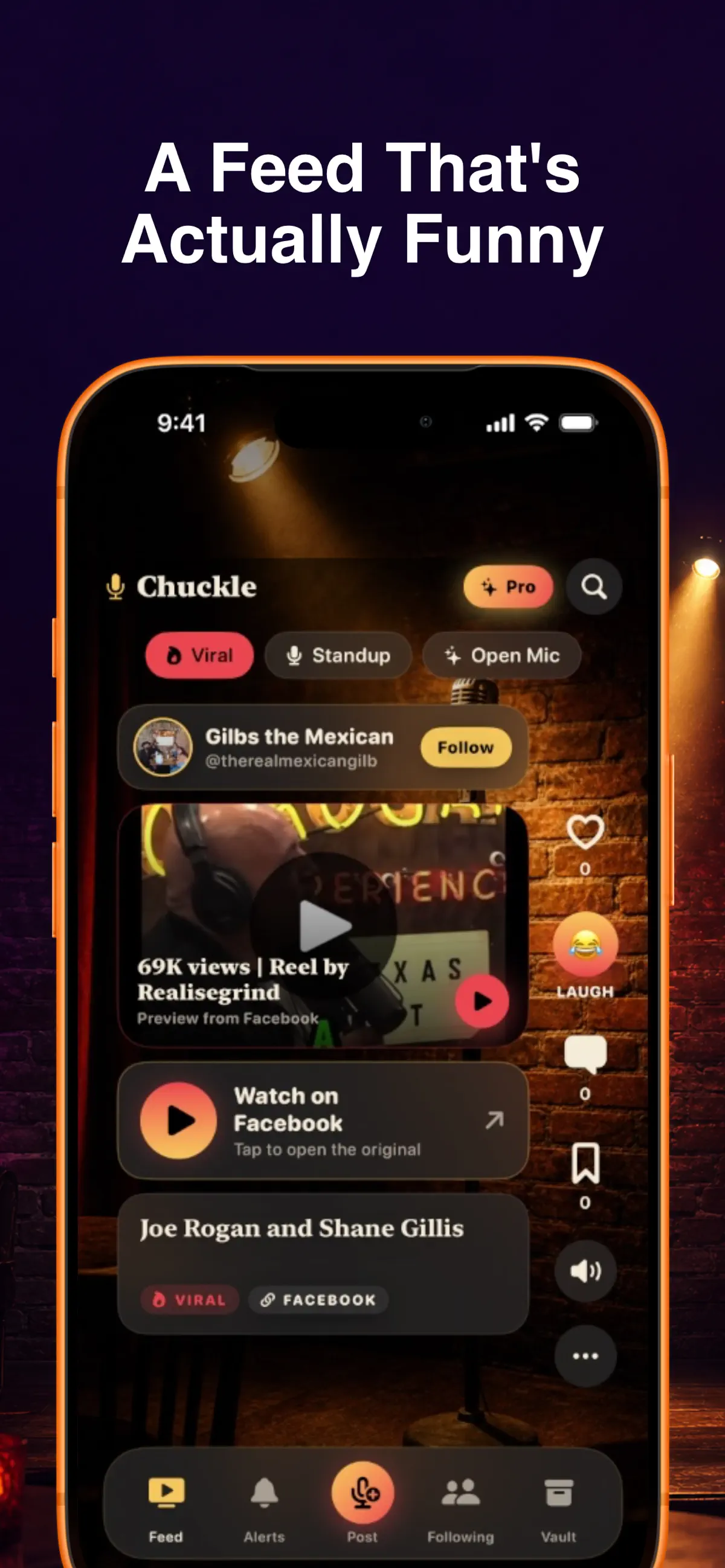
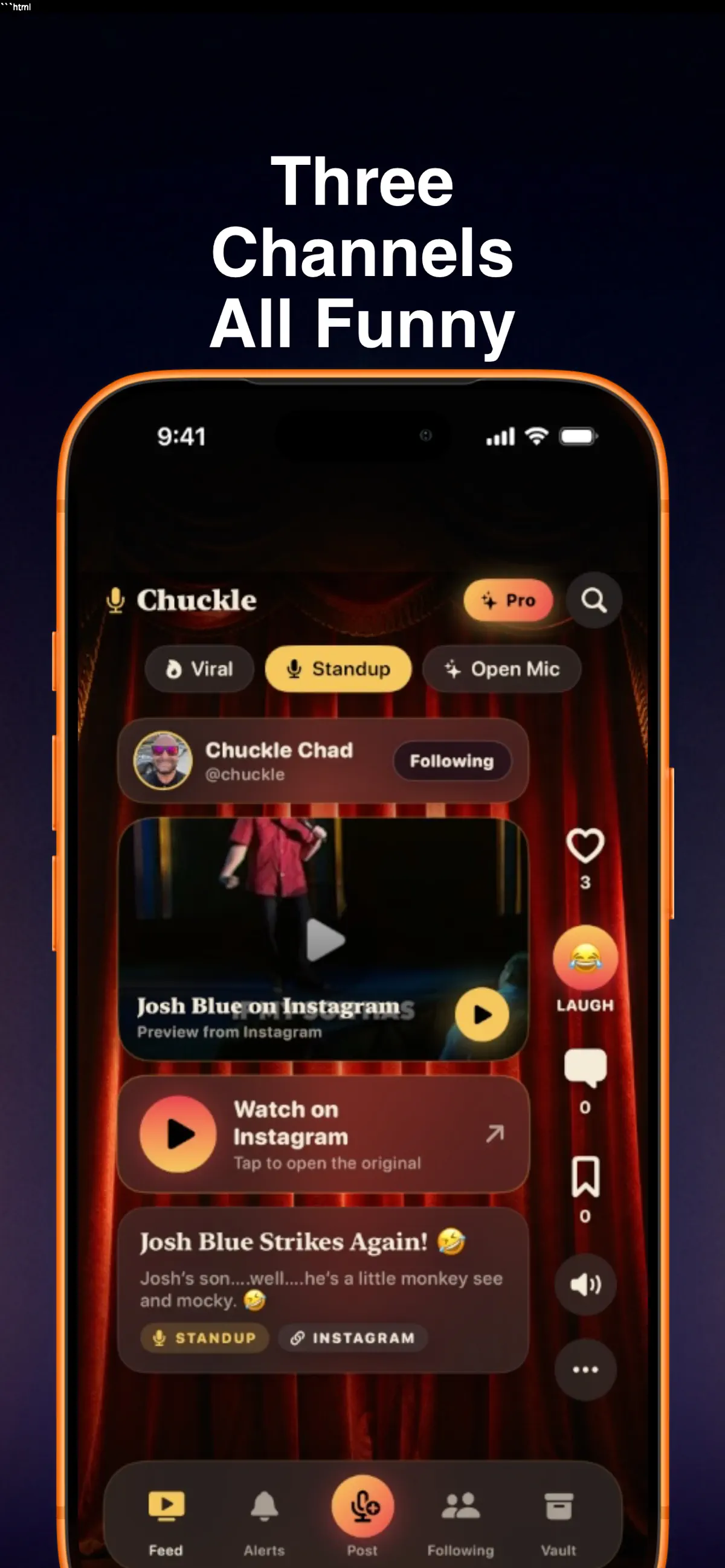
On Chuckle's comedian posting page, you can give a clip a title and caption, choose the feed that fits it, and keep the work on your profile. Open Mic makes sense for fresh material you are still learning from. Standup is a better home for a bit that has found its shape. The distinction helps you share the work without pretending every idea is finished.
Watch other clips for craft, not a template to copy. Notice how a comic gives the audience context, lets a pause breathe, or uses a detail to make a premise specific. Then take that observation back to your own material. Your best writing source is still the way you see ordinary life when you are paying attention.
A quick stand-up writing checklist
- Choose one narrow premise. Start with the detail you actually care about.
- Name the tension. Find the gap between the normal version and your honest version.
- Write several turns. Give yourself options before choosing a punchline.
- Shape the beats. Make the setup, turn, and tags easy to follow aloud.
- Rehearse out loud. Edit for the ear, not only for the page.
- Test one change. Let each performance tell you what to try next.
That is the work: notice, write, say it, listen, revise. The process does not remove the risk of standing in front of people. It makes the risk worthwhile because every version gives you something real to build on.
Frequently asked questions
Writing stand-up comedy FAQ
How long should a beginner stand-up bit be?
Start with one clear idea that you can explain and perform in roughly one to three minutes. A short bit lets you hear whether the setup is clear, whether the turn arrives soon enough, and whether there is room for another laugh without asking the audience to follow too many ideas at once.
Do I need a joke formula to write stand-up?
No. A formula can give you a useful prompt, but it cannot replace a specific point of view. Begin with something you actually notice or care about, then use tools such as contrast, exaggeration, misdirection, or a surprising comparison to explore it from more than one angle.
How often should I rewrite stand-up material?
Rewrite after you have said the material out loud and can name one thing to improve. Change the setup, order, wording, or ending with a purpose, then test that version. Rewriting every line at once makes it hard to learn which choice helped.
What should I do if a joke does not get a laugh?
Keep going, then review the moment after the set. Check whether the audience understood the premise, whether you rushed the turn, or whether the idea needs a stronger angle. A quiet response is information, not a reason to abandon every part of the bit.