


Getting comedy gigs is not a separate talent contest that starts after you become funny. It is the practical side of making your current work easy to see, easy to trust, and easy to book. The goal is not to skip from a first open mic to a headline slot. The goal is to collect real stage time, make a clear case for the next appropriate spot, and leave each room wanting to work with you again.
Every comedy scene has its own people, rooms, and unwritten habits. That means no article can promise a calendar date or a guaranteed fee. It can give you a working system. Build the material, learn the local rooms, make one honest booking package, ask for the right next opportunity, and use each performance to become a safer, stronger choice for the next booker.
Know which kind of gig you are ready to earn
Not all comedy gigs ask for the same proof. An open mic usually asks you to sign up, respect the clock, and bring a short set. A guest spot asks a host to trust you in front of a real audience. A paid feature asks a booker to believe you can hold more time, arrive prepared, and make the show better. A headline or private-event booking adds another question: can you help sell tickets or serve this specific audience?
That ladder is useful because it changes the ask. If you have a dependable five minutes, aim for more rooms where you can repeat and improve it. If you have a strong clip and people in your scene have seen you perform well, a guest spot may be the right next step. If you can deliver a tested 15 or 20 minutes, your outreach can be more direct. Asking for a level that matches the work you can do now feels professional, not timid.
Keep one rule in mind: a shorter spot done well is more valuable than a longer one you are not ready to hold. The common gig ladder described by Comedy Booker has different gates at each stage. Treat those stages as a way to choose the next useful test, not as a schedule you have failed to meet.
Build stage time that a booker can recognize
Early on, your job is repetition. Pick a short set that represents your current voice, take it to rooms where you can learn, and make notes after each attempt. You are listening for more than the loudest laugh. Notice whether the premise lands quickly, whether the room understands the point of view, where your pace changes, and whether the ending earns the time it took to get there.
Do not treat every open mic as an audition for a bigger room. It is also where you become the comic who arrives on time, watches the show, knows the format, and is decent to the staff. Those habits travel through a local scene faster than people expect. The reason is simple: a producer is not only choosing jokes. They are choosing whether putting you on the lineup will make an already busy night easier or harder.
Keep a simple record of the rooms you play, how much time you had, which material you used, and one change to test next. The guide to preparing for an open mic can help you build the routine. Over time, that small record gives you better evidence than a vague feeling that the set is getting better.
Create a booking package that takes one minute to scan
Before you message anyone, make it easy to answer the obvious questions. Use your performing name, location or travel range, a short bio, one current clip, a clear way to contact you, and only credits you can state precisely. If you work clean, have a tested set length, host, or fit a particular kind of room, include it when it is genuinely relevant.
The important word is current. A booker does not need every flyer, every old contest, or a biography that begins before you started comedy. They need a clear read on what you can bring to this room. A representative clip should have usable sound, enough setup for a new viewer, and material that reflects the act you would actually perform. If the clip is from a special night, label its context honestly rather than using it to imply a different level of experience.
A simple comedian website gives a booker one dependable place to find those pieces. Your comedy bio supplies the words a host can use on a listing. Together, they remove the scavenger hunt before anyone has even watched the joke.
Find rooms before you ask for a spot
Make a short list of rooms that suit the work you are building. Look at their lineups, show length, audience, venue rules, and whether they run open mics, showcases, or booked nights. Attend when you can. You will learn who produces the show, what the room actually needs, and whether your material and stage time make sense there.
This research also saves you from the lazy version of outreach: sending the same note to every comedy venue in town. A tailored note does not need to be long. It simply proves that you know which show you are writing to and why you fit. The booking guidance from Open Comedy makes the same practical point: a clear clip, complete profile, and message that reflects the listing are more useful than a generic blast.
Relationships matter, but do not turn that into a performance. Be a good audience member. Support other comics. Talk after a show when the host is not juggling doors, tickets, or a line of performers. Ask a specific question when you need one, then listen to the answer. Familiarity grows from showing up and being easy to deal with, not from demanding access before anyone has seen your work.
Send a short, useful message
When it is time to reach out, write for the person who has to make a quick decision. Name the show. State your availability. Give one sentence about the act or the kind of spot you are seeking. Include one link to a recent clip and one link to your profile or booking page. If you have a relevant credit or a mutual connection, mention it plainly. Then stop.
A good note might look like this: “Hi Jordan, I’m Maya Torres, a Chicago comic with a tested 10-minute set. I enjoyed the way your Thursday show pairs newer comics with a strong feature. I’m available May 8 or May 15 if you need a guest spot. Here is a recent clip and my profile. Thanks for considering me.” It is specific, brief, and gives the booker something useful to open.
Do not promise an audience you cannot bring, call yourself clean if the clip says otherwise, or hide the fact that you are still developing. A truthful fit is a better start than a flashy mismatch. If the room says no, do not argue the case. Keep working, return when you have more proof, and let a stronger clip make the next message easier.
Make the first booked spot easy on the room
Getting the yes is not the finish line. Confirm the time, location, set length, pay, audience expectations, and any clean-material or recording rules before the show. Ask about arrival time and whether there is a host or producer you should check in with. A professional comedian does not need a grand entrance. They need to be ready before they are needed.
Bring material that fits the slot, not the material you are personally tired of doing. If you have five minutes, use the five that are most likely to work for people who do not know you. If you are asked to do ten, have ten minutes you have actually run. Keep a shorter backup option in case the show changes. Respect the light, do not run long, and do not treat crowd work as a substitute for a prepared set.
The advice in Greg Dean’s working-comedian guide still gets the core lesson right: a booker needs to feel you are safe to hire. Prepared material, a clear communication style, and respect for staff do more to create that feeling than a long list of adjectives on a profile.
Turn one gig into useful proof
After the show, thank the person who booked you and the people who helped the night run. If there is a natural moment, ask whether they want your availability for another date. Do not press for an answer in the middle of teardown. The point is to leave a clean impression and make it easy to continue the relationship when the room has another opening.
Keep the follow-up proportionate to the relationship. A brief thank-you the next day is enough after a first spot. Save a later check-in for something useful, such as a new availability window, a cleaner clip, or a show that genuinely matches the room. Repeated “just checking in” messages create work for the person who is already doing the booking. Useful updates give them a reason to remember you.
Review the recording if you have permission to make one. Choose a clip only when it stands on its own and accurately represents the performer you are now. A phone clip can be useful if the audio is understandable and the viewer can follow the setup. Cut dead air, but do not cut away the context that makes the punchline work. The best clip is not necessarily the loudest laugh. It is the one that helps a stranger understand your voice.
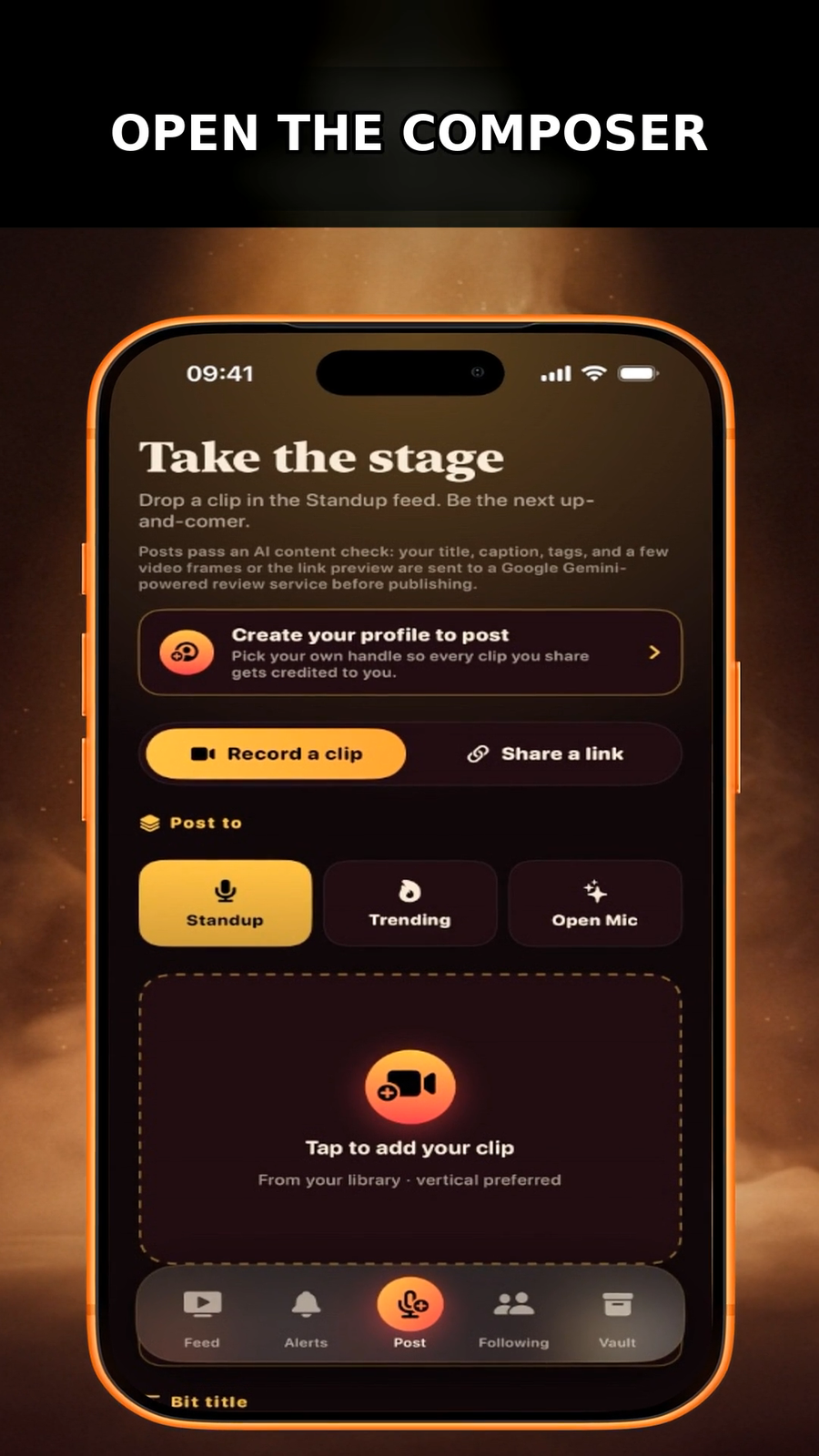
Chuckle gives comedians a place to keep clips, a profile, dates, and links together. That can turn a good set into something a new fan or booker can revisit. Share finished work in Standup, use Open Mic for material that is still developing, and keep the public profile current so a single strong clip has somewhere useful to lead.
A 30-day plan for getting more comedy gigs
- Week one: List three rooms where your current set would fit. Attend one show or study each lineup before contacting anyone.
- Week two: Perform your tested set at two or three rooms, record when permitted, and make one focused change based on the response.
- Week three: Update your bio, profile, contact route, and representative clip. Remove anything that no longer reflects the act.
- Week four: Send a short, tailored message to one or two bookers whose shows match your experience. Follow their instructions, state your availability, and make the links easy to open.
Repeat the cycle. More gigs come from stronger work, clearer proof, and better relationships built over time. The career part is not separate from the comedy part. Every useful stage minute can become a better set, a better clip, a more confident profile, and a more credible next ask.
Frequently asked questions
How to get comedy gigs FAQ
How long does it take to get comedy gigs?
There is no universal timetable. The useful measure is repeatable stage time, stronger material, and whether hosts can rely on you. Some comics earn a guest spot quickly, while others need longer to build a set and relationships that fit their local scene.
What should I send a comedy booker?
Send a short note that identifies the specific show, confirms your availability, and includes one current clip plus a link to your bio or profile. Add only credits and practical details that help the booker decide whether you fit the room.
Should new comedians accept unpaid gigs?
An unpaid spot can be worthwhile when it offers a real audience, useful stage time, a recording, or a relationship with a reputable room. Know what you are getting, protect your travel and time, and do not confuse a vague promise of exposure with a useful opportunity.
How do I get booked again after one comedy gig?
Arrive prepared, respect the time and the room, perform material that suits the slot, thank the person who booked you, and follow up only when you have a relevant next availability or a stronger clip. Reliable work makes the next ask easier.


