


The path from open mic comedy to paid work is rarely one dramatic breakthrough. It is usually a series of small, repeatable steps: show up, improve the material, become reliable, make your work easy to find, and share clips that show what you do well.
Working comedians often say they wish they had started those habits sooner. They waited to build an audience until they felt established. They posted clips without a clear profile. They chased one viral moment instead of building a body of work. If you are moving from open mics to showcases, paid spots, and repeat bookings, these are the practical lessons worth putting in place now.
1. Treat open mics as a working laboratory
An open mic is more than a place to find out whether one joke works. It is where you learn to build a set, read a room, and stay reliable under different conditions. Test openers that establish your voice quickly, transitions between ideas, versions of the same premise, crowd-work approaches, closers, and material for different rooms.
If a joke works in one room but fails in another, that is useful information. A bar crowd, a comedy-club audience, and a late-night mic may respond to different pacing and subjects. Record the set when the room allows it, then review more than the laughs: notice pauses, posture, volume, timing, and moments where your attention leaves the audience. The point is not perfection. Leave each set knowing what to keep, change, or test next.
2. Become easy to book
Being funny matters. Professionalism and reliability do too. A booker should be able to find your name and city, performance experience, style, set lengths, a current clip, contact details, and useful credits or dates in a minute or two. When the answer is scattered across several platforms, you create friction before they have watched the joke.
Your online presence should answer one question: what will this comic bring to my show? Use a short, clear bio and a current photo. Put a recent clip with a real audience near the top. If you work in more than one style, show range without making the profile confusing.
Do a quick booking check from a stranger’s point of view. Can they identify you, see you perform, understand the kind of room you suit, and contact you without guessing? If not, solve the basic problem before adding more links or polishing tiny details. Clear information makes a newer comedian feel easier to trust, which matters when a producer is choosing between several people they do not know well.

A Chuckle comedian profile keeps your bio, social links, tour dates, and clips together. When someone discovers one joke, they have a direct path to more of your work. Start with what a booker or a new fan needs first, then add supporting details as the work grows.
3. Build an audience before you feel ready
You do not need a finished special or a huge following to start. You need a clear point of view and a consistent place for interested people to find more. Identify the subjects, experiences, and tone that make your material distinct, then make clips that support that identity.
One funny clip may earn a view. Several connected clips help someone understand why they should follow you. Mix a short observation, a stronger bit, a crowd-work moment, and a polished section of a set. Pick only the channels you can consistently maintain. It is better to show up well in a few places than to give every platform a half-finished version of your attention.
Consistency does not mean posting every day or turning every set into content. It means viewers can recognize you when they return. A comedian with a clear point of view, a few strong clips, and a profile that stays current has given a new fan something concrete to follow. That foundation also makes it easier to share a show date or a new clip without starting from zero each time.
4. Post the right clip to the right channel
Not every clip has the same job. Before you submit, decide what you want the viewer to see. Use Open Mic for new material, an early version of a story, a fresh character, a premise still developing, or a clip from a local mic. Use Standup for a polished bit, a finished story, a strong section of a professional set, or a clip that represents your current performance level. Use Trending for a short, immediate joke, quick act-out, or a moment that starts strong.
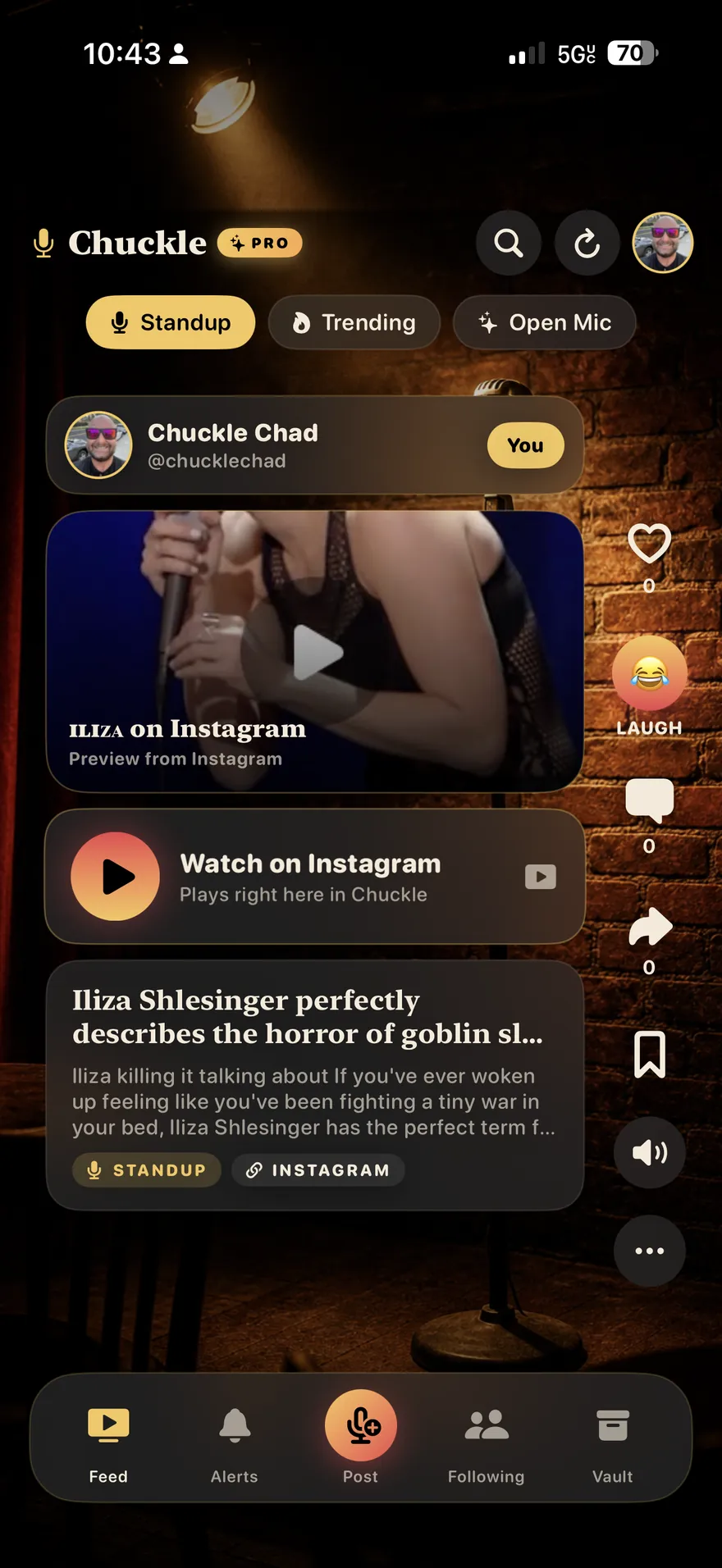
Chuckle lets comedians submit a video or link, add a title and caption, choose the fitting channel, and place the clip on their profile. Give viewers enough context to follow the setup, then let the performance do the work. A useful title sets the premise without giving away the punchline.
Keep the opening of a clip especially clean. A person who was not in the room needs to understand the situation quickly. Trim the long walk to the mic, the room chatter, and any setup that does not serve the moment. Do not cut so aggressively that the punchline loses its meaning. The goal is a complete, understandable piece of comedy, not a mysterious burst of audience noise.

If the clip is still being tested, Open Mic gives it an honest context. If it is ready to represent your best work, Standup is likely the better fit. The Chuckle app for comedians has the full posting path in one place.
5. Make every clip lead somewhere
A clip should not be the end of the interaction. If someone laughs, they should be able to find another clip. If they like your material, they should be able to follow you. If they want to see you live, the next step should be clear. Keep the clips connected to your name, bio, links, and current dates.
Chuckle gives viewers ways to comment, follow comedians, and save clips, which supports a longer connection than a passing view. An Open Mic clip can lead a viewer to a polished Standup clip. A fast Trending moment can introduce the longer version of your work. That progression lets you share developing material without making it the only thing people see.
Think of the profile as the home for the trail your clips create. Pin or feature the work that best explains you now, not the oldest post that happened to travel. Keep show dates and links current. When you get a better recording, replace the clip that no longer reflects your stage presence. Small maintenance makes the whole body of work feel intentional.

6. Focus on relationships, not only reach
Paid opportunities often come through relationships built over time. Show up to the same rooms. Support other comics. Thank hosts and producers. Promote shows you are part of. Be professional when you communicate. If someone gives you a spot, make it easy for them to want to work with you again.
You can create opportunities by producing a small showcase too. It teaches you how to manage a lineup, communicate with performers, promote an event, and keep an audience engaged. Those skills make you more useful to other producers. Follower count is not the only measure. A smaller group that attends shows, shares clips, and brings friends can be more valuable than a large audience with no connection to the work.
Good room etiquette is not a performance. It is simply remembering that everyone else is trying to get better too. Be on time, stay for other acts when you can, respect the schedule, and keep messages simple and responsive. A host who trusts you to communicate clearly is more likely to remember you when a spot opens than someone whose only interaction was asking for a favor.
7. Use performance data without losing your instincts
Your own judgment remains central. You know the room, the joke, and the context behind a performance. Still, response data can reveal patterns. If one clip earns more laughs, comments, or shares than another, ask whether the premise was easier to understand, the clip began closer to the funny part, or more of your personality came through.
Chuckle Pro’s Green Room gives comedians a closer look at clip response, including laughs, comments, shares, strongest channel, and a running average. Use that signal to choose the next test, not as a replacement for writing, rehearsal, or live audience experience.
Use one question at a time. If a clip starts strong but fades, try a tighter middle next time. If one kind of opener repeatedly earns a response, test that shape with another topic. A number can point you toward a useful experiment, but it cannot tell you whether a joke belongs in your act. Keep the stage and your own instincts in the lead.

Build a review routine you can keep
The useful work happens between shows. Give yourself a short, repeatable review after each set instead of waiting for a perfect weekend to analyze everything. Write down the room, the length of the slot, the bits you used, one line that got a clear response, and one moment that felt unclear. Then choose a single adjustment for the next performance.
Keep the change small enough that you can identify what happened. You might move a punchline earlier, replace one confusing word, slow down before a turn, or cut a setup that keeps losing the room. Avoid rewriting the entire set after one mixed night. Comedy rooms vary. A focused habit across several rooms produces better evidence than one big reaction, good or bad.
Over time, this record becomes a working map of your material. You will see which ideas consistently earn attention, which bits need a different order, and which clips are ready to represent you outside the room. That is how open-mic repetition begins to turn into professional momentum: not by guessing what worked, but by returning with a sharper version of yourself.
A practical next step for your next 30 days
- Attend at least one regular open mic each week.
- Record and review one set when the room allows it.
- Choose one clip that shows your current voice.
- Submit it to the Chuckle channel that fits.
- Update your comedian profile with your bio, links, and dates.
- Follow up with people who engage with your work.
- Repeat with a new clip and one focused lesson.
Open mic comedy is where many careers begin. The next step is making your work easier to find, understand, and book. Submit your clip to Chuckle and give your next bit a dedicated place to reach people who came to watch stand-up.
Frequently asked questions
From open mic to paid gig FAQ
How do comedians get paid gigs?
Most paid spots grow from a mix of stronger material, reliable behavior, relationships with rooms and producers, and a clear way for a booker to see what you do. There is no single shortcut, but consistent work makes each of those pieces easier to build.
What should a comedian put on a booking profile?
Start with a current photo, a short bio, your city, set lengths, a recent performance clip, contact details, and any useful upcoming dates or credits. Keep the strongest, most representative clip easy to find.
How often should a new comedian post clips?
Post at a pace you can sustain while still protecting the work. One clear, well-contextualized clip after a useful performance is more valuable than scattering unfinished material without a plan.
Should I share an open mic clip?
Yes, when the clip can stand on its own and you have permission to record. Keep enough setup for a new viewer to understand the laugh, label developing material honestly, and use the recording to learn before treating it as a finished calling card.