


A comedian press kit is not a scrapbook and it is not a promise about the act you will have someday. It is a fast, honest answer to a booker’s practical questions: who is this comic, what do they sound like onstage, what can they do in this room, and how do I reach them? Put those answers in one dependable place and the next conversation becomes much easier.
Think of the kit as the useful companion to your live work. A promoter might see you at an open mic, hear about you from another comic, or need to fill a date quickly. They should not have to search through old flyers, social posts, and different inboxes to decide whether you fit. One current link gives them the material to watch, the details to check, and a clear way to reply.
Start with the decision a booker needs to make
Different rooms need different proof, but the job of the kit stays the same: make a specific booking decision simple. A host may want to know whether you can work a short opening slot. A club may need a current tape and a list of rooms where you have worked in the role you are seeking. A festival may set exact video, bio, and submission rules. Read those instructions before sending anything, then adjust the package without changing the truth.
For example, the Tulsa Loony Bin’s booking guidance asks applicants for a full, unedited set video, a list of clubs and roles, current availability, a bio and headshot, and contact details. That is a reminder that a press kit is not a substitute for following a room’s process. It is the organized source you draw from when that process asks for materials.
Before you build a page, name the kinds of bookings you are ready to pursue. Your answer changes the order and emphasis. A five-minute showcase spot needs a sharp short clip and reliable contact details. A clean corporate set needs a clear note about the material and the set length you can deliver. A club feature application may need a fuller tape and role-specific credits. Match the kit to the work, not to a generic idea of looking impressive.
Lead with one representative clip
The clip answers the question no bio can answer: what is it like to watch you perform now? Choose material with understandable sound, enough setup for a stranger to follow, and an audience response that belongs to the actual joke. A booker should not need an explanation before pressing play. Avoid a montage that hides the rhythm of the act or a compilation of every loud moment from several different nights.
Follow the request when a submission specifies length or format. The Winnipeg Comedy Festival’s current submission guidance, for instance, accepts unlisted YouTube links and also accepts written submissions or links to a site with clips. That makes a durable, easy-to-open profile valuable, but it does not mean one clip fits every opportunity. Keep the original recording and a few clearly labeled cuts so you can send the appropriate version without scrambling.
Record responsibly when the venue permits it. The guide to preparing for an open mic can help you arrive with a tested short set, while building a comedy set gives you a way to shape material before you decide it represents you. A clear five minutes that sounds like your current act is more useful than ten minutes you would not want to perform again.

Write a bio someone can actually use
Your short bio is practical copy. A host may paste it into a show listing, a festival may use it in a program, and a producer may scan it between messages. Give them your performing name, where you are based or travel from, the kind of comedy you do when that helps, and one or two precise facts that show your experience. Keep it in the third person so it is ready to reuse.
Specific beats vague. “A Chicago comedian who hosts a weekly showcase and performs a clean 20” says more than “one of the funniest rising stars in comedy.” If you have no festival credits or television appearance, do not fill the space with adjectives. A strong opening sentence and a current clip are enough to begin. The article on writing a comedy bio walks through how to choose the facts that belong in that first paragraph.
Keep a longer version separately if you need one, but do not force every detail into the kit. The person reading it needs a quick, truthful picture. They can ask for more when the fit is real.
Show credits, set details, and photos honestly
After the clip and bio, include the details that reduce follow-up questions. List credits by what you actually did: hosted, featured, headlined, opened, performed at a festival, or appeared on a show. Name the role because it gives context. A venue where you did one guest spot is still worth mentioning if it is relevant, but it should not sit beside a headline credit as if they are the same thing.
State usable set lengths rather than your ambition. If you have a tested five, say five. If you can host, say that. If you offer clean material, name it only if that is a reliable part of the act. A comedy EPK service such as Open Comedy’s press-kit format centers the same essentials: a concise introduction, bio, location, at least one clip, photos, and booking details. The pattern works because it gives a booker what they need without turning the page into a résumé dump.
Use one current headshot and a small selection of stage photos that a promoter could use on a flyer. Keep the originals somewhere easy to share. Choose an image where your face is visible and the setting makes sense, not a dark crowd shot where the performer disappears. If an event asks for a specific crop, file type, or resolution, send that instead of assuming the page preview is enough.

Make contact and availability easy to find
Put one booking email or one person’s contact details in a predictable place. If you work with an agent or manager, use their preferred route. If you handle your own bookings, a professional email that you check is better than asking a producer to guess which direct message to send. Add your home base or realistic travel range when it helps a room decide whether you are possible for the date.
Availability does not need to be a public diary. A short line such as “Based in Atlanta, available for selected Southeast dates” can be enough. For a specific opportunity, send the date information they request. Link to your comedian website when it already holds current shows, clips, and booking details, so the kit has a stable home rather than becoming another disconnected file.
Check every link on a phone. A booker may open it between shows, on a train, or in a crowded venue. If the video takes too long to find, the contact route is buried, or the page looks unfinished on a small screen, the kit creates unnecessary work. The goal is to make the next yes easier, not to make someone admire your filing system.
Keep one source of truth, then tailor the send
A simple public page is often the best source of truth because it stays current. Keep the clip, bio, photos, and contact details there. Maintain a small folder with high-resolution images and a one-sheet for people who ask for downloads. Then tailor the message around the particular room, show, or festival instead of attaching the same oversized packet to every note.
When you reach out, write a short message that names the show, states why you are contacting that person, and gives the relevant link. The guide to getting comedy gigs covers the outreach side: make the ask proportionate to your current work, respect the room’s instructions, and give the booker something they can open quickly. The press kit is the proof behind that message, not the message itself.
If you are promoting your own event, a clean kit also makes your own work easier. Your bio, images, and clip can inform a flyer, partner outreach, and listing copy. Pair it with the plan in how to promote a comedy show so the materials are serving a real audience, not just sitting in a folder.
Use Chuckle as a current home for the work
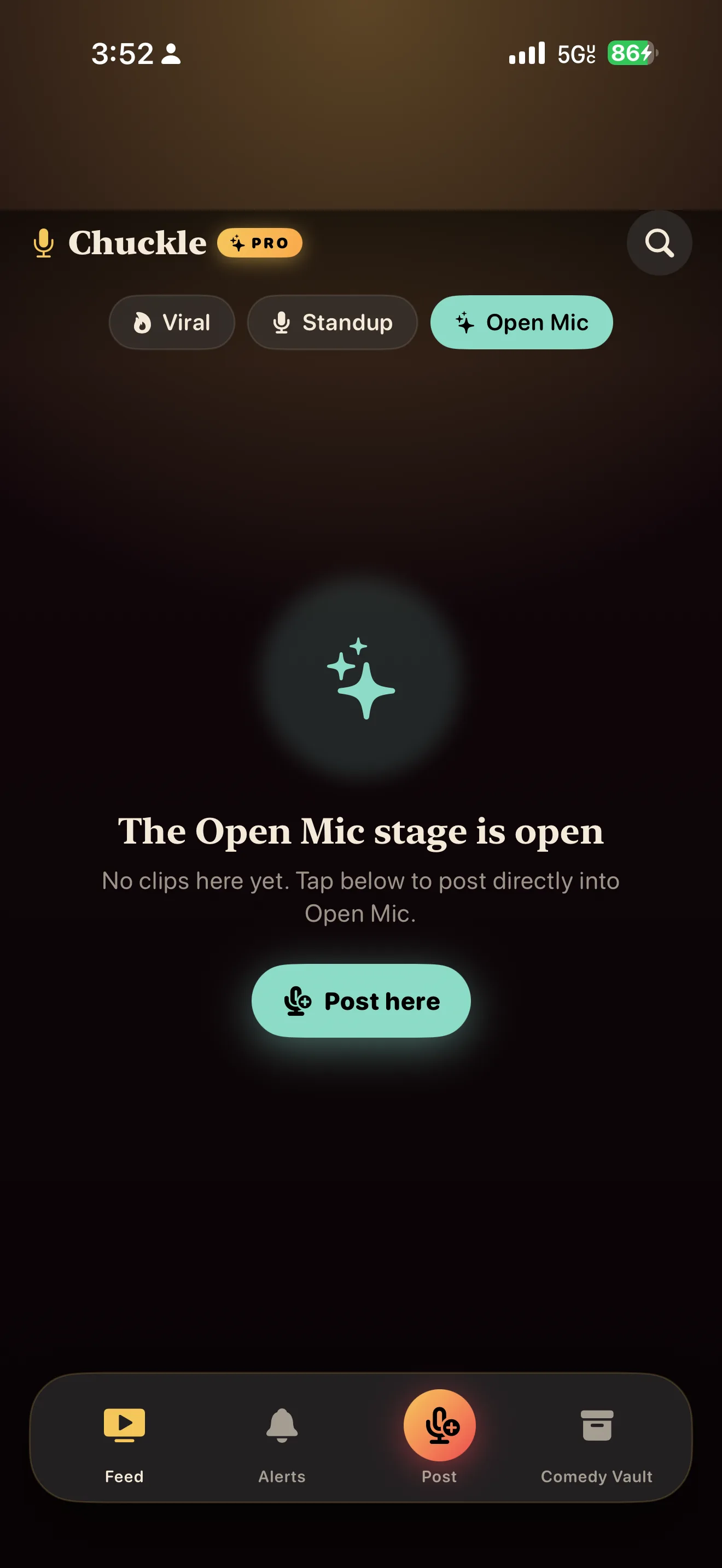
A press kit works best when it leads to material that stays current. Chuckle gives comedians a focused place for clips, a profile, and links, so a booker or new fan can see work without sorting through an unrelated feed. Share polished material in Standup, use Open Mic for developing work, and keep the profile aligned with the clip you send out.
Your kit does not need to be elaborate to be useful. A representative clip, an honest bio, precise details, a small set of usable photos, and one clear contact route are enough to make you easier to consider. Update those pieces after a meaningful new credit, a stronger clip, or a change in your availability. Otherwise, leave the page alone and keep getting better onstage.

Do a ten-minute proof check before you send it
Open the kit as if you are a producer who has never heard of you. Watch the first minute of the clip with the sound on, then try every important link on a phone. Can you tell the performer’s name, the current set length, the location or travel range, and the booking contact without scrolling through a life story? If not, simplify the page before sending it.
Next, compare the page with the message you are about to send. The clip, bio, and credits should describe the same performer. Remove an old show date, a retired social profile, a photo that no longer looks like you, or a credit you cannot explain. Ask one trusted comic, producer, or friend to spend two minutes with the link and tell you what they would need to ask next. Their unanswered question is the next thing to clarify.
Finally, keep a short note beside the kit with its last review date. Recheck it before a festival deadline, a showcase submission, or a targeted booking ask. That small routine keeps your materials useful without making the press kit into a weekly redesign project.
A final comedian press kit checklist
- Representative clip: the format and length suit the opportunity, and the audio is clear.
- Short third-person bio: it says who you are without inflating the credits.
- Accurate experience: roles, set lengths, clean material, and travel details are all current.
- Usable photos: one headshot and a few stage images are easy to share when requested.
- One contact route: a booker can reach the right person without searching.
- Phone check: links, video, and contact details work cleanly on a small screen.
Frequently asked questions
Comedian press kit FAQ
What is a comedian press kit?
A comedian press kit, often called an EPK, is one clear page or file a booker can use to understand your act and contact you. It normally includes a representative clip, a short bio, accurate credits, photos, set details, and a booking route.
Should a comedian press kit be a PDF or a webpage?
A webpage or simple public link is usually the easiest starting point because the clip can play and the information can stay current. Keep a clean PDF one-sheet or a downloadable photo folder ready when a venue specifically asks for it.
How long should a comedy booking clip be?
Follow the venue or festival’s stated requirements first. When no format is given, choose one representative, easy-to-watch clip that shows your current act clearly instead of sending a large folder of disconnected short videos.
What if I do not have many comedy credits yet?
Use the proof you genuinely have. A clear clip, accurate set length, location, and honest short bio are more useful than inflated credits. Refresh the kit as your material and opportunities develop.