


Crowd work is not a test of whether you can outsmart a stranger. It is a live conversation shaped into something the whole room can enjoy. Good crowd work starts with attention: ask a question you actually want answered, hear what comes back, find the detail with some comic energy, and leave before the exchange becomes a private chat. That is why it can feel electric when it works. Nobody else will get that exact moment again.
1. Know what crowd work is for
Crowd work is audience interaction, but it is not automatically a detour from the set. It can settle a room, help you respond to a disruption, give your prepared material a natural reset, or create a short moment that shows how you think under pressure. The goal is still the same as any other part of stand-up: make the audience feel included in a clear, funny point of view.
That means crowd work is not a replacement for writing jokes. Prepared material gives you a route through the night. Crowd work gives you a chance to respond when the room offers something useful. If you are still building your first few minutes, start with a short set you understand, using the process in this guide to writing a comedy set. An exchange can add texture, but it should not have to rescue an empty notebook.
It also helps to watch the craft with a little more care. The National Comedy Center's look at how comedy gets made is a useful reminder that writing, performance, and audience response all shape a comic voice. Crowd work simply puts that response closer to the surface.
2. Start with a question that gives you somewhere to go
The easiest crowd-work question is not the cleverest one. It is a question that produces a clear answer and tells the rest of the room why the answer might matter. “What do you do?” can work when you are ready to ask a useful follow-up. “How do you know each other?” can create a small story. “Who has the longest commute here?” gives you a shared problem without putting one person on trial.
Before you ask, decide what you are listening for. You might be looking for a contrast, an oddly formal job title, a familiar inconvenience, an overly specific answer, or a reaction that reveals something about the room. Do not decide the punchline before the person speaks. That is how an interaction becomes an interrogation with a microphone.
Keep the first question open enough to invite a real answer and short enough to be heard the first time. If the audience member has to guess what information you want, the room spends more time decoding the question than enjoying the response. A clean opening makes it easier to repeat the detail that matters and turn it into a shared image.

3. Listen, then repeat the useful detail
Most audience members are not trying to give a perfect line. They are answering a question while a room watches. Help them. Listen for the one detail that lets everyone else picture the situation, then repeat it into the microphone in your own words. Repeating is not stalling. It gives the back of the room the information they need and gives you a beat to find the angle.
Suppose someone says they work in a job with an unexpectedly serious title. You do not need to make a joke about their clothes, their voice, or their willingness to answer. You can explore the contrast in the title, imagine the least glamorous version of the job, or compare it to a world the audience already knows. The laugh comes from the connection you make, not from proving that the person gave you ammunition.
When the answer does not offer much, do not squeeze it until it becomes uncomfortable. A simple “fair enough” and a move back to the set is a better choice than making the room wait for a joke you do not have. A quick exit is not a failure. It shows that you can protect the pace.
4. Make the room feel included
The person you are speaking with is only one part of the audience. The rest of the room needs to understand what is happening and why it is funny. Repeat the relevant answer, face the whole crowd as you respond, and make the joke broad enough that people who did not hear every word can still join the laugh.
That is also why inside references can be risky. If an audience member mentions a workplace, neighborhood, or friend group that nobody else recognizes, translate the useful part before you heighten it. “So you work in a place where every meeting has a dress code?” is easier for the whole room to enter than a string of names they have never heard.
Think of the exchange as a tiny bit. It needs a beginning that establishes the detail, a middle that develops the funny angle, and an end that releases the tension. The same shape makes a prepared set easier to follow, which is why writing stand-up as a sequence of clear beats is such useful practice. You are still guiding a room. The source material simply arrived a few seconds ago.
5. Heighten the situation, not the person
A good crowd-work joke can be sharp without making somebody feel small. Start from the situation, the contrast, or your own point of view. If someone says they are on a first date, the joke can be about the strange public pressure of a first date. If they have an unusual job, the joke can be about the title or the fantasy version of what that job must involve.
Avoid reaching for appearance, status, a personal loss, or a fact that makes the person visibly shut down. The room notices when an audience member is no longer having fun. Even people who laugh in the moment may decide they do not want to answer you next, which leaves the set colder than it needs to be.
Playful crowd work gives the other person room to be recognizable and human. You can tease a detail without claiming to know their whole life. When in doubt, make yourself part of the joke: your bad guess, your overactive imagination, or the way you are trying to understand the answer. That keeps the power balanced and gives you more angles than a blunt insult ever could.

6. Leave while the exchange still has energy
Crowd work often gets weaker because the comic stays too long. Once you have a laugh or two, return to your set. A simple line such as “That explains everything,” “I appreciate you,” or “All right, back to the problem I was having” can close the exchange and make the transition feel intentional.
Give yourself a prepared place to land. Know which bit, tag, or story beat comes next before you start talking to the room. That prevents the common trap where a good interaction ends and the comic has to search through their notes or their memory while everyone waits. The best exit is quick enough that the audience feels the momentum continue.
This matters even more at an open mic, where the time may be short and the room may include performers waiting for their own turn. The practical habits in these stand-up comedy tips, especially leaving space for laughs and making one purposeful revision, apply to crowd work too. The exchange should serve the set, not take it over.
7. Practice the skill without pretending it is scripted
You cannot rehearse an audience answer word for word, but you can practice the parts you control. Write a few questions that suit your voice. For each one, imagine three ordinary answers and list possible follow-ups. Practice repeating an answer in a concise way. Try turning a plain detail into a comparison, an exaggeration, or a question about the logic behind it.
The point is not to memorize a response and force it onto a real person. The point is to build enough comfort with the moves that you can listen without panicking. When an audience answer surprises you, you will have a few places to look: what is the contrast, what image does this create, what sounds overly serious, and what would be the most politely ridiculous consequence?
Make practice specific. Ask a friend one ordinary question, repeat the useful detail, and try three different angles before choosing the cleanest one. One angle might be a comparison, another might be a small exaggeration, and another might be a quick callback to something you already established. Then practice the exit line: a short tag, a clear acknowledgement, and back to the next bit. The goal is to feel the shape of an exchange, not to prove that every answer needs a perfect punchline.
Recording these small drills can be useful because it reveals whether you are rushing past the answer. Leave enough space for the audience to hear the person, understand the connection, and react with you. That same pacing makes a crowd-work clip easier to watch later, especially for someone who was not in the room when it happened.
It also helps to decide your guardrails before the show. Choose the topics you will leave alone, the kind of tone you want to keep, and the moment when you will return to a written joke. Those decisions make the interaction feel more relaxed because you are not inventing every rule while the room is watching. Confidence often looks like spontaneity from the audience, even when it comes from a few thoughtful limits set in advance.
Studying different approaches can help too. The National Comedy Center's comedy archives make it easier to explore how different performers use character, pacing, and point of view. Watch for the moment a comic gets the room's attention, not just the loudest response. That is often where the useful decision happened.
8. Share crowd-work clips with the setup intact
A live exchange can make a strong clip because viewers feel that it could only happen in that room. But someone watching later did not hear the opening question, see where the audience member was sitting, or understand why the response mattered. Keep enough setup in the clip for a new viewer to follow the turn without needing to read the comments.
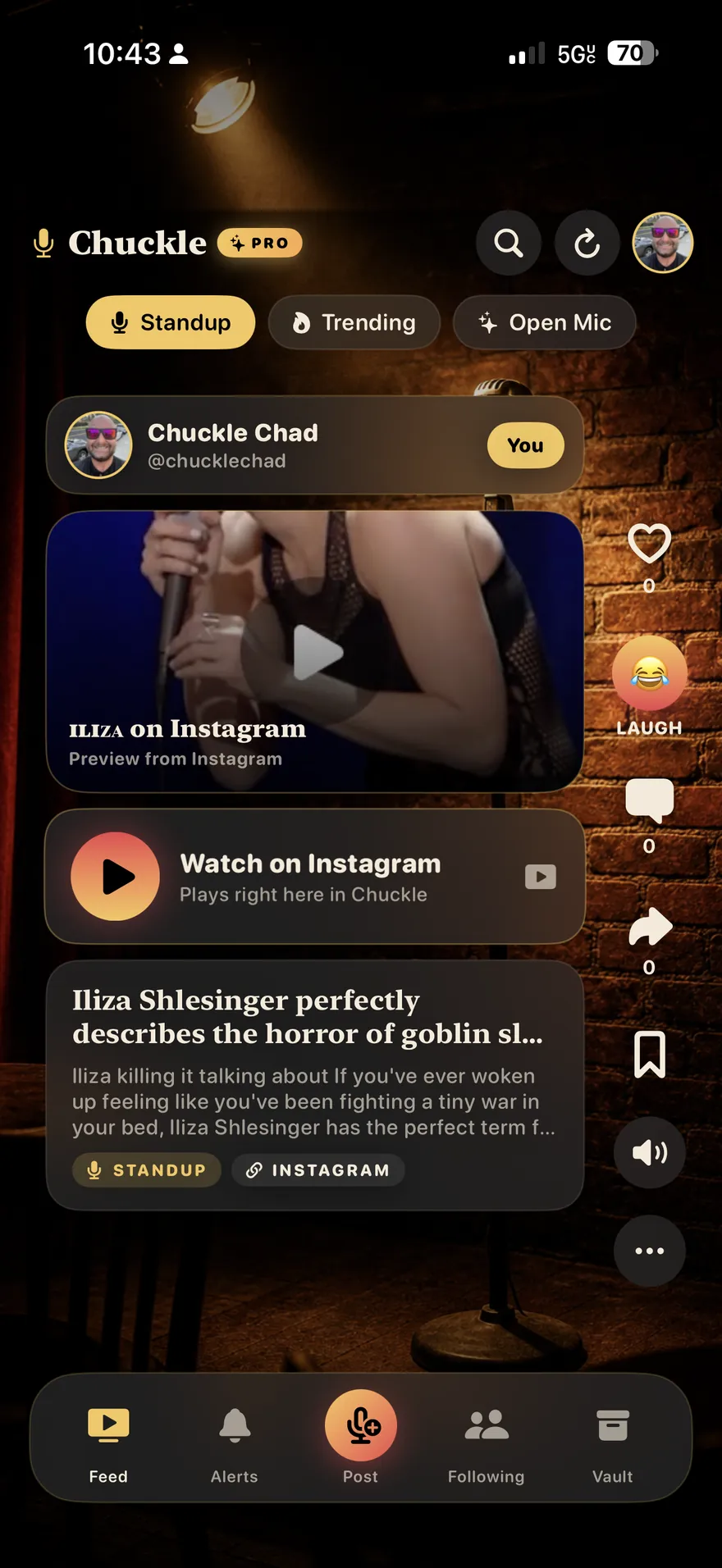
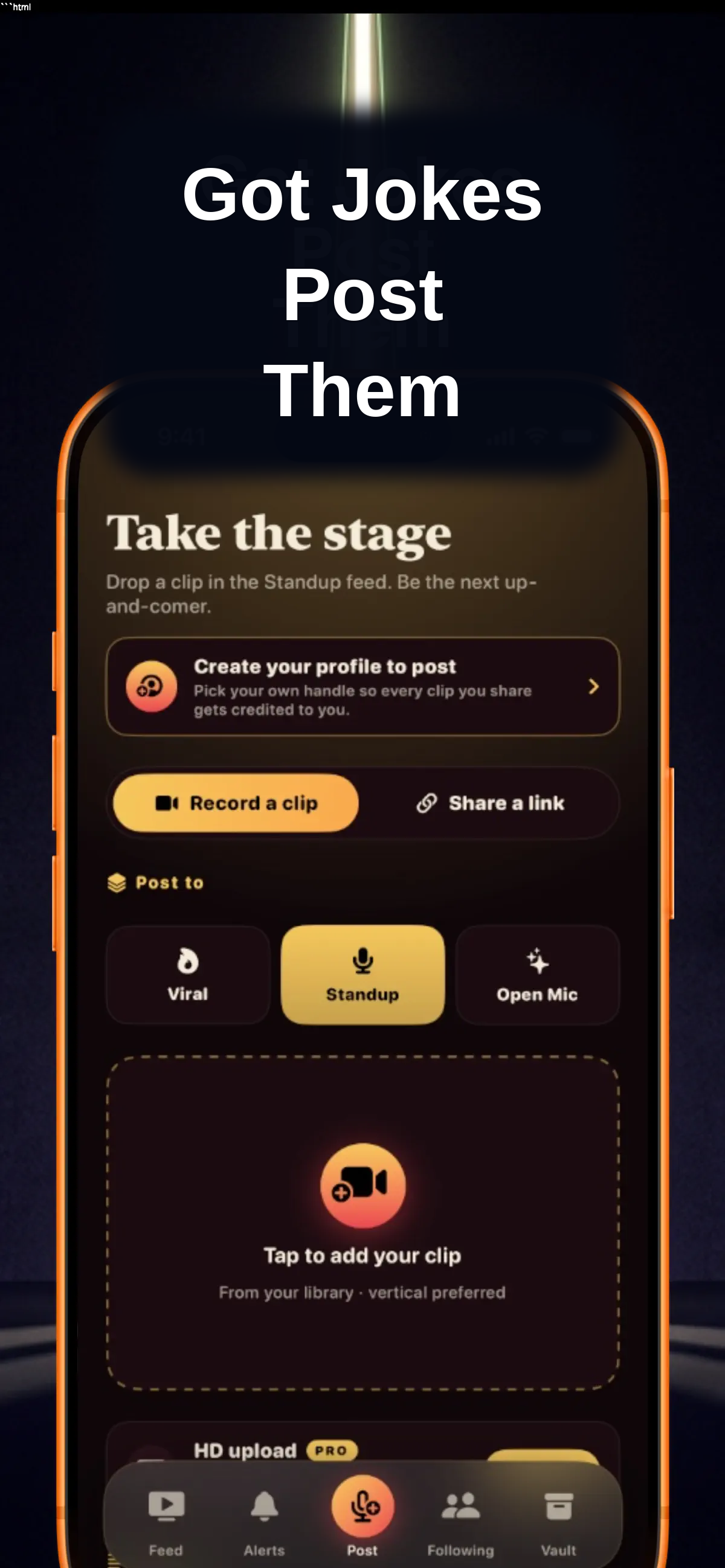
Chuckle gives comedians a place to title a clip, add context, choose the right feed, and keep their work together on a profile. A good crowd-work clip does not need to sound like a takedown. Choose the moment where your point of view is clear, the person remains part of the fun, and the joke still works for someone who was not there.
A quick crowd-work checklist
- Ask a clear question. Know what kind of detail could give the room a useful picture.
- Actually listen. Let the answer shape the response instead of forcing a prepared line.
- Repeat what matters. Keep the entire audience inside the conversation.
- Heighten the situation. Find a playful angle without trying to embarrass the person.
- Exit cleanly. Leave while the exchange has energy and return to a prepared beat.
- Keep the setup in the clip. Give a later viewer enough context to enjoy the moment.
Crowd work is most useful when it feels like an extension of the comic you already are. Bring curiosity, keep the room included, and let the exchange end before it becomes a contest. That is how a quick audience answer becomes a real moment instead of a long delay between jokes.
Frequently asked questions
Crowd work comedy FAQ
What is crowd work comedy?
Crowd work comedy is material that grows from a live exchange with someone in the room. The comic asks a question, notices a detail, or responds to something unexpected, then turns that moment into a joke the whole audience can follow.
Do comedians plan crowd work?
A comic cannot plan the audience's exact answer, but they can prepare the skill. Useful preparation includes knowing how to ask clear questions, hearing the answer, repeating the detail the room needs, finding a playful angle, and returning to prepared material before the exchange loses pace.
How do you avoid being mean during crowd work?
Make the joke about the situation, the contrast, or your own point of view instead of trying to embarrass a person. Leave room for the audience member to be part of the moment, not the target of it, and move on when the exchange has reached a satisfying laugh.
Should a beginner use crowd work at an open mic?
A beginner can try a small, low-pressure exchange, but prepared material should remain the foundation of the set. Start with a question that helps the room settle in, keep the response short, and return to a rehearsed beat instead of depending on the audience to create the whole performance.